Table of Contents
Scrum Org Professional Scrum with Kanban Quick Facts
The Professional Scrum with Kanban certification celebrates your ability to bring proven flow principles to the Scrum framework. This exam overview gives you clear insight into how agility and flow combine, helping you grow confidence in guiding teams toward sustainable, predictable delivery.
How does the Professional Scrum with Kanban certification empower Scrum practitioners?
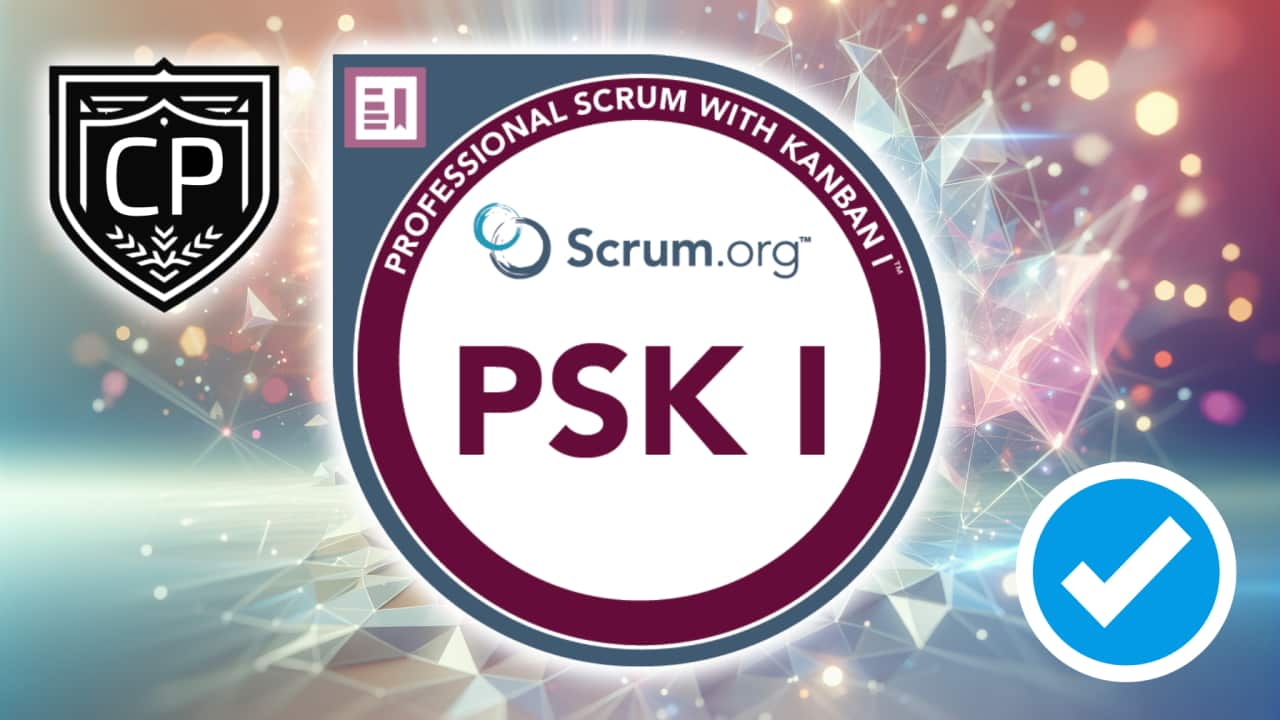
The Scrum Org Professional Scrum with Kanban (PSK I) certification validates your understanding of how Kanban practices enhance Scrum's transparency, flow, and delivery predictability. It is ideal for Scrum Masters, Product Owners, Developers, and agile professionals seeking to apply Kanban principles without changing their fundamental Scrum roles or accountabilities. The certification demonstrates your skill in integrating flow metrics, limiting work in progress, managing service level expectations (SLEs), and continuously improving the Scrum team's workflow using empirical, data-driven insights.
Who Should Pursue the Professional Scrum with Kanban™ (PSK I) Certification?
The Professional Scrum with Kanban (PSK I) certification from Scrum.org is designed for experienced Scrum professionals and agile practitioners eager to strengthen their understanding of flow, empiricism, and delivery predictability. It’s ideal for Scrum Masters, Product Owners, Developers, and Agile Coaches who want to apply Kanban principles within a Scrum framework.
If you already use Scrum but want to boost flow optimization, transparency, and predictability, this certification helps you evolve your practices while staying true to Scrum’s core values and structure.
What Types of Roles Benefit Most from Earning the PSK I Certification?
This certification adds strong value for professionals working in or aspiring to roles such as:
- Scrum Master or Agile Coach applying metrics and Kanban to improve team throughput.
- Product Owner aiming for more predictable product delivery and value flow.
- Team Leads and Developers improving workflow visibility and efficiency.
- Project and Delivery Managers seeking modern approaches to managing flow in complex adaptive systems.
The PSK I credential signals your ability to unite Scrum’s agility with Kanban’s flow-based insights, making you a stronger leader in delivering continuous value.
How Much Does the PSK I Certification Exam Cost?
The Professional Scrum with Kanban I (PSK I) assessment costs $200 USD per attempt. Once you purchase an exam password, it remains valid indefinitely until you decide to take the exam. Every password is valid for one attempt only, and there are no hidden or renewal fees—your certification lasts a lifetime once you pass.
How Many Questions Are on the Professional Scrum with Kanban Exam?
The PSK I exam includes 45 questions in a variety of formats, including multiple choice, multiple answer, and true/false. Each question is designed to test your understanding of Scrum and Kanban theory, as well as your ability to interpret real-world situations and apply agile flow practices effectively.
How Long Do You Have to Complete the Exam?
Candidates are given 60 minutes to complete the PSK I exam. The time is more than sufficient for thorough readers who are comfortable with the Scrum and Kanban Guides. Good pacing is key—most candidates finish with time to review a few challenging questions before submitting their results.
What Is the Passing Score for the PSK I Certification?
To earn your certification, you must achieve a minimum passing score of 85%. Because the assessment measures genuine understanding rather than rote memorization, it’s important to study how Kanban practices deepen Scrum’s empirical approach and flow optimization principles.
In What Language Is the Scrum.org PSK I Exam Offered?
The PSK I exam is currently offered in English. However, test-takers may use browser translation tools like Google Translate if preferred. Scrum.org allows this as long as the official instructions are followed, and many learners successfully complete the exam in their native language using this feature.
How Is the PSK I Exam Structured?
The PSK I exam format is online, open-book, and self-paced, meaning you can take it from anywhere once you’re ready. The questions combine conceptual understanding with scenario-based reasoning. Some test your ability to interpret metrics or apply flow concepts such as Work In Progress (WIP), Cycle Time, or Service Level Expectations (SLEs) within real Scrum settings.
What Are the Major Domains Covered on the PSK I Exam?
Scrum.org identifies three main domains for the PSK I assessment:
- Understanding and Applying the Scrum Framework
- Complementary Practices — Kanban Practices
- Complementary Practices — Agile Metrics for Kanban
Each domain connects Scrum’s adaptive nature with Kanban’s continuous improvement focus.
What Foundational Knowledge Should You Study Before Attempting PSK I?
To prepare effectively, you should be deeply familiar with both:
- The Scrum Guide – detailing the core framework, accountabilities, events, and artifacts.
- The Kanban Guide for Scrum Teams – outlining Kanban theory, flow metrics, practices, and definitions specific to Scrum environments.
Additionally, reviewing key concepts such as empiricism, transparency, and continuous flow optimization will help reinforce your understanding of how Scrum and Kanban enhance each other.
How Does Kanban Complement the Scrum Framework?
Kanban enhances Scrum by emphasizing visualization, flow, and predictability. It provides additional practices to improve transparency and continual delivery:
- Visual boards make work visible.
- WIP limits prevent overload and improve focus.
- Flow metrics like Cycle Time and Throughput guide improvement.
- SLEs help teams deliver predictably.
These enhancements deepen Scrum’s empirical loops of transparency, inspection, and adaptation—helping teams deliver value faster and more sustainably.
Are There Any Prerequisites for the PSK I Exam?
There are no formal prerequisites for taking the PSK I certification exam. However, Scrum.org highly recommends that candidates have experience working with Scrum Teams and a basic understanding of the Scrum and Kanban Guides. Attending a Professional Scrum with Kanban course is also encouraged as it provides hands-on exercises and real-world discussions on applying these practices effectively.
What Type of Questions Appear on the PSK I Assessment?
You can expect conceptual and scenario-based questions that test your understanding of both frameworks’ principles. For example, you may be asked how to handle aging work items, interpret flow metrics, or determine how Kanban practices fit within Scrum’s Sprint events. Unlike memorization-based tests, this exam rewards comprehension and real-world application.
What Resources Are Recommended for PSK I Study Preparation?
Scrum.org offers valuable preparation materials, including:
- Scrum with Kanban Open Assessment – a free practice quiz to gauge readiness.
- Professional Scrum with Kanban Glossary – essential terminology and definitions.
- Suggested Reading List of blogs, videos, and books on flow metrics and Kanban practices.
Additionally, improve your readiness using realistic Professional Scrum with Kanban practice tests designed to mirror the official assessment structure and difficulty.
How Should You Prepare to Learn and Apply Kanban Metrics Effectively?
Understanding Kanban metrics is key to success on this exam and in practice. Focus on mastering:
- Work in Progress (WIP) – the number of active items.
- Cycle Time – how long items take from start to finish.
- Throughput – number of items completed per time unit.
- Work Item Age – time spent on in-progress items.
- Service Level Expectation (SLE) – forecasted delivery predictability window.
These metrics, when analyzed empirically, help teams continuously improve flow and delivery outcomes.
Is the PSK I Certification Valid for Life?
Yes, once you pass the exam, your PSK I certification is valid for life. Scrum.org does not require renewals or annual maintenance fees. This means your credential will remain active permanently as part of Scrum.org’s commitment to recognizing proven, lasting knowledge.
What Score Report Will You Receive After the Exam?
After completing the PSK I assessment, you’ll immediately see your total score and a breakdown of your performance across the main competencies. Scrum.org does not reveal which specific questions were answered correctly or incorrectly, but the feedback highlights areas where you can continue to grow your understanding.
What Makes Scrum.org Certifications Stand Out?
Scrum.org certifications are known worldwide for their integrity, rigor, and consistency. Unlike attendance-based credentials, every Scrum.org certification requires passing a challenging assessment that validates both knowledge and practical understanding. This ensures that your PSK I certification carries true professional weight within global agile and Scrum communities.
How Does the Professional Scrum with Kanban Training Course Help?
The Professional Scrum with Kanban course is an immersive, activity-based class taught by Professional Scrum Trainers (PSTs). Through exercises and case studies, you’ll learn how to:
- Apply Kanban practices within Scrum Events.
- Optimize flow while maintaining Scrum’s roles and accountabilities.
- Use data to forecast delivery and improve predictability.
Students receive an exam password and, if they take the exam within 14 days but don’t pass, they get a second attempt at no additional cost.
Can You Use Kanban Without Changing Scrum?
Absolutely. One of the key insights from the PSK I curriculum is that Kanban enhances rather than replaces Scrum. By implementing flow-based techniques, teams can achieve faster delivery of increments, improved predictability, and better balance between capacity and demand—all without compromising Scrum’s principles.
How Can This Certification Advance Your Career?
Becoming a Professional Scrum with Kanban Practitioner demonstrates mastery in combining flow metrics with agile delivery. It showcases your ability to help teams achieve predictable release cycles, balance workloads, and deliver continuous value. Employers increasingly look for leaders who can manage complexity through data-driven agility—and PSK I certification signals exactly that.
Where Can You Register for the Official PSK I Assessment?
You can register directly on the Official Scrum.org Professional Scrum with Kanban Certification page. There, you can purchase your exam password, review official study materials, and learn more about the certification structure. Once you’re ready, you can take the exam anytime and from anywhere online.
The Professional Scrum with Kanban (PSK I) certification empowers agile professionals to merge the strengths of Scrum and Kanban for improved flow, transparency, and predictability. Whether you’re guiding teams, leading improvements, or advancing your agile career, this certification offers both deep knowledge and lifelong recognition for your skill in applying modern flow-based practices.