Table of Contents
Scrum Org Professional Scrum Developer Quick Facts
The Professional Scrum Developer certification equips software professionals to build high-quality products while embracing collaboration, agility, and continuous improvement. This overview provides essential exam insights so you can confidently prepare with clarity and purpose.
Why earn the Scrum Org Professional Scrum Developer certification?
The Professional Scrum Developer (PSD) certification demonstrates your ability to apply modern engineering practices within a Scrum framework to deliver valuable, high-quality software. It affirms both your technical skills and your understanding of how to work as part of a self-managing Scrum Team. Earning this credential signals that you can balance coding excellence with agile principles, creating solutions that meet customer needs while supporting continuous delivery and shared ownership across the team.
Who Should Pursue the Scrum Org Professional Scrum Developer Certification?
The Professional Scrum Developer (PSD) certification is perfect for individuals who are passionate about delivering high-quality software within Scrum Teams. It’s ideal for developers, software engineers, DevOps specialists, testers, and architects who work in Agile environments and want to prove their technical proficiency with Scrum.
Whether you’re coding daily or guiding technical teams, this certification validates your ability to use Scrum principles, engineering practices, and modern DevOps techniques to deliver valuable software.
What Career Opportunities Open Up After the Professional Scrum Developer Certification?
The PSD certification can significantly boost your career in Agile and software development. Certified professionals are equipped to excel in roles such as:
- Scrum Developer or Agile Developer
- Software Engineer in cross-functional Scrum Teams
- DevOps Specialist or CI/CD Engineer
- QA Automation Engineer
- Technical Architect or Software Delivery Lead
More organizations now prefer or require Scrum-certified developers, making this credential a powerful way to demonstrate your professional agility and delivery skills.
What Is the PSD Certification Exam Code?
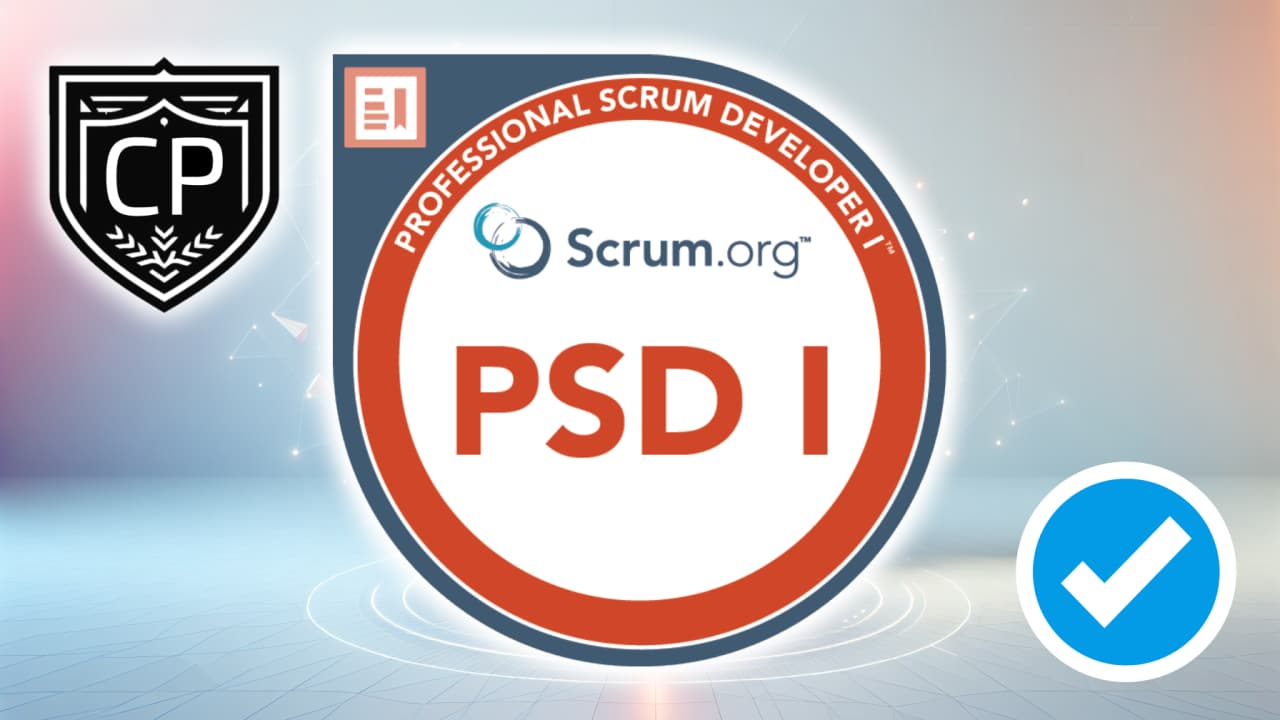
The official exam code for this certification is PSD I. It validates your ability to apply Scrum principles, Agile engineering practices, and DevOps automation to build quality products in iterative development cycles.
How Much Does the PSD I Exam Cost?
The exam fee is $200 USD per attempt. Payment is made directly through the Scrum.org store, and each purchase comes with one exam password valid for a single attempt. There are no renewal or maintenance fees, as the certification is valid for life once earned.
How Many Questions Are on the Exam?
You’ll face 80 questions on the PSD I exam. Questions come in a mix of multiple choice, multiple answer, and true/false formats. Each question is designed to test both your theoretical knowledge and practical application of Scrum principles in the context of software development.
How Much Time Do I Have to Complete the Exam?
You will have 60 minutes to complete the PSD I exam. Since it’s a time-boxed assessment, it’s important to pace yourself carefully. Most candidates find that practicing under timed conditions helps improve focus and decision-making during the real test.
What Is the Minimum Passing Score?
To pass the PSD I exam, you must score at least 85%. Scrum.org maintains this high standard to reflect true mastery of Scrum as applied to software engineering. You’ll receive a detailed report showing your performance across the Professional Scrum Competency areas to help you understand your strengths and skill gaps.
How Difficult Is the Professional Scrum Developer Exam?
While the exam expects real practical understanding, success comes naturally with preparation and hands-on Scrum experience. The key is to focus on Scrum theory, Agile engineering practices, technical quality, and collaboration within a Scrum Team. If you study diligently and apply realistic examples from your development work, the exam feels very achievable.
What Topics Are Covered in the PSD I Exam?
The PSD certification covers four main domains of knowledge aligned with the Professional Scrum Competencies:
- Developing & Delivering Products Professionally
- Understanding and Applying the Scrum Framework
- Developing People and Teams
- Managing Products with Agility
The heavy weighting on the first domain emphasizes your ability to build software in a professional Scrum environment.
What Languages Is the Exam Offered In?
The PSD I exam is available in English. However, candidates can use the Google Translate Chrome Plugin to take the test in their native language if desired, following official Scrum.org instructions.
Are There Any Prerequisites for Taking the PSD Certification?
There are no mandatory prerequisites for taking the PSD exam. However, you will benefit most if you already have a foundation in software development and an understanding of Agile and Scrum principles. Scrum.org also highly recommends taking their Applying Professional Scrum for Software Development (APS-SD) course for hands-on learning before attempting the assessment.
Is Training Required to Attempt the PSD I Exam?
Training is not required, but strongly recommended. The Applying Professional Scrum for Software Development course provides immersive experience through team-based exercises over several sprints. The course even includes a free assessment attempt, giving you a guided path to certification success.
What Learning Resources Are Suggested for Exam Preparation?
Scrum.org provides excellent study materials and recommended reading for the PSD exam. The best approach is to combine theoretical learning with hands-on practice:
- Essential Study Resources
- The Scrum Guide – your core reference.
- The PSM I Suggested Reading list for foundational Scrum concepts.
- Developer-focused books such as The Professional Scrum Team and The DevOps Handbook.
- Practice and Continuous Learning
- Try the Scrum Open and Scrum Developer Open practice assessments.
- Engage with the Scrum.org blogs and discussion forums for community insights.
- Use this realistic Professional Scrum Developer practice test to build confidence before exam day.
What Is the Recommended Level of Experience Before Attempting PSD I?
Although experience levels vary, Scrum.org recommends that candidates have practical development experience within Agile teams. Familiarity with working in a cross-functional, self-managing environment will make it easier to apply Scrum values and engineering concepts during the exam.
Does the Certification Ever Expire?
The certification is valid for life once earned. There are no renewal fees, no recertification requirements, and no continuing education credits needed. This lifetime recognition from Scrum.org ensures long-term credibility for your professional profile.
What Are the Key Advantages of Earning the PSD Certification?
Earning your PSD certification demonstrates more than exam knowledge—it shows that you can truly build working software in an Agile environment. Key benefits include:
- Validation of your technical and collaborative skills in a Scrum setting
- Increased credibility with employers seeking experienced Agile developers
- Deeper understanding of DevOps, continuous delivery, and software craftsmanship
- Recognition as a Professional Scrum Developer by Scrum.org
It’s a globally respected achievement that strengthens both individual and team-based career growth.
How Is This Scrum Certification Different from Other Vendor Credentials?
Scrum.org certifications stand out because they cannot be earned through class attendance alone. Instead, every candidate must pass a rigorous exam, demonstrating real understanding and professional mastery. This ensures that holders of the PSD badge represent verified expertise and commitment to Agile principles.
How Can I Register for the Professional Scrum Developer Exam?
To register, simply visit the official Scrum.org store and purchase the PSD I assessment. You’ll receive an email with your unique exam password, which never expires until used. Take the assessment anytime, anywhere online, at your preferred pace.
Steps to register:
- Go to the Scrum.org store
- Purchase the “Professional Scrum Developer I” assessment
- Receive your one-time-use password
- Begin the exam when you’re ready
How Is the PSD I Exam Scored and Reported?
Your results are calculated immediately upon submission. If you achieve the 85% passing score, you’ll instantly receive your PSD certification and a free Credly digital badge for social sharing. Even if you don’t pass, Scrum.org provides a performance breakdown by knowledge area, helping you strengthen weaker topics before retaking the exam.
What Materials Can I Use During the Exam?
The PSD exam is closed book and proctored online, meaning you must rely solely on your preparation and understanding. Having practiced with the Scrum Guide, open assessments, and example questions will give you the confidence to work efficiently and accurately.
Which Domains Should I Prioritize During Study Time?
Since 85% of the questions come from Developing & Delivering Products Professionally, that should be your main study focus. Dive deeply into topics like:
- Backlog refinement and collaboration between Product Owners and Developers
- Emergent design and incremental architecture
- Continuous integration, delivery, and testing practices
- Maintaining quality and managing technical debt
The remaining domains—understanding Scrum, developing people and teams, and managing products—will be lighter but still vital for a well-rounded perspective.
What Should I Do After Earning My PSD Certification?
After earning your PSD certification, consider expanding into advanced Scrum roles:
- Advance to Professional Scrum Master (PSM I or II)
- Explore Professional Scrum Product Owner (PSPO) if you’re interested in business ownership
- Deepen expertise with Scaled Professional Scrum (SPS) for large Agile organizations
You’ll also find that this certification enriches collaboration within your team and enhances your leadership potential across Agile delivery environments.
Where Can I Find the Official Scrum Org PSD I Certification Details?
All official information, policies, and exam registration details are available on the Scrum.org Professional Scrum Developer Certification page.
The Professional Scrum Developer I certification proves to the world that you can develop, deliver, and continuously improve software with true Scrum professionalism. Preparing thoroughly, practicing the right topics, and mastering Agile delivery will help you join a growing community of globally certified Scrum professionals.