Table of Contents
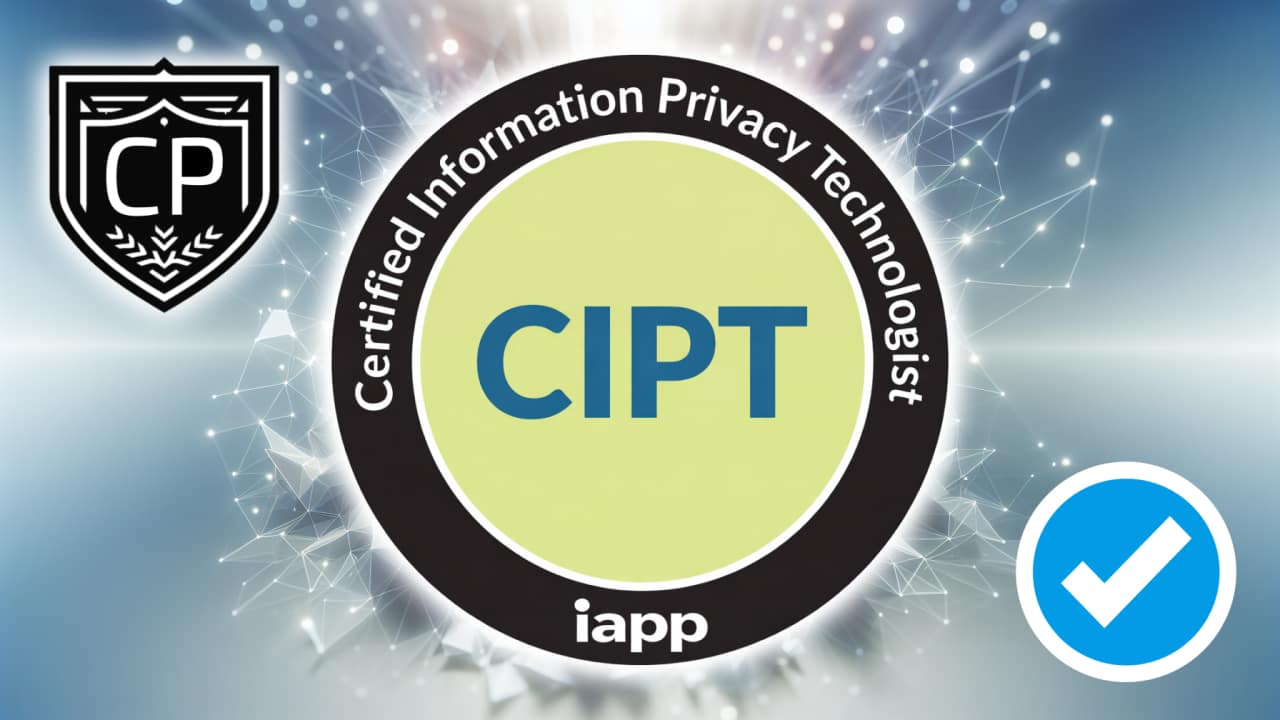
IAPP Certified Information Privacy Technologist CIPT Quick Facts
The IAPP Certified Information Privacy Technologist (CIPT) certification empowers professionals to bridge the gap between technology and privacy by design. This overview provides you with a clear, concise understanding of the CIPT exam structure so you can confidently plan your path toward certification success.
How does the CIPT certification elevate your impact in privacy and technology?
The CIPT certification validates your ability to apply privacy principles in technology environments, helping organizations embed data protection into every phase of design and operation. It’s designed for technologists, engineers, developers, and privacy professionals who want to demonstrate expertise in aligning technical solutions with global privacy frameworks. Holders of CIPT lead the way in implementing practical, compliant, and ethically sound designs that foster trust and demonstrate accountability within complex data ecosystems.
Who Should Earn the IAPP Certified Information Privacy Technologist (CIPT) Certification?
The IAPP Certified Information Privacy Technologist (CIPT) certification is perfect for professionals who design, build, or maintain systems that handle personal data. It’s designed for those who want to apply privacy principles within technical environments— bridging the gap between privacy professionals and development or engineering teams.
You’ll find this credential especially valuable if you work in IT, software development, cybersecurity, data management, or product design. Even if you’re not a privacy lawyer, the CIPT helps you become fluent in global privacy concepts and how to translate them into technical and operational practices.
Whether you’re looking to become the go-to privacy expert in your organization or want to boost your technical credibility in the growing field of privacy engineering, this certification proves your ability to integrate data protection into everyday technology decisions.
What career paths can CIPT certification support?
Becoming CIPT certified can open the door to a wide range of roles across industries that value embedded privacy controls and secure data design. Common job titles include:
- Privacy Technologist or Privacy Engineer
- Data Protection Officer (technical focus)
- IT Security or Risk Analyst
- Cloud Security Engineer
- Software Engineer or Solutions Architect with Privacy focus
- AI and Data Ethics Specialist
Employers in technology, finance, healthcare, and government sectors value professionals who can ensure privacy-by-design. The certification signals that you can evaluate systems for compliance with privacy laws and align technology with ethical data handling practices.
What is the exam code for CIPT?
The official exam code is CIPT. The exam is part of the IAPP’s suite of globally recognized privacy certifications and measures your ability to embed privacy into technology systems and business processes.
When you register, you’ll simply select the CIPT exam under the IAPP certification options.
How many questions are on the CIPT exam?
The CIPT exam contains 90 total questions. These questions primarily come in a multiple-choice format, some requiring you to choose one correct answer and others allowing multiple responses.
The question distribution is carefully structured based on a published Body of Knowledge that covers five major domains. The exam’s design ensures your practical understanding of privacy-by-design principles, risk management, and privacy engineering practices.
How long do candidates have to complete the CIPT exam?
You’ll have 150 minutes to complete the CIPT exam. This allows plenty of time to thoughtfully work through each scenario and question.
The exam tests both conceptual understanding and applied technical knowledge, so ensure you pace yourself evenly across domains. Time management during practice tests can greatly enhance your confidence on exam day.
What is the passing score for the CIPT exam?
To earn your certification, you’ll need a minimum score of 75. While scoring is not scaled, the passing threshold is established to confirm a solid command of privacy and technology integration skills.
Each domain contributes proportionally to your total score, so a balanced study plan that covers all five major areas is essential to achieving success.
How much does it cost to take the CIPT exam?
The CIPT exam costs $550 USD. This includes one sitting for the certification exam. IAPP members may receive exam and training discounts, making it a smart move to join the organization before scheduling your test.
Exam pricing may vary by currency and location, so be sure to confirm current fees through the IAPP platform during registration.
Which languages is the IAPP CIPT exam available in?
The CIPT exam is offered in English, French, and German. The IAPP regularly evaluates additional language needs, ensuring that privacy professionals around the world can access the exam in their preferred language.
For non-native speakers, the exam’s structure emphasizes comprehension of privacy principles over complex wording, making it approachable for global practitioners.
How is the CIPT exam structured?
The exam is divided into five primary content domains, each representing core skill areas of a privacy technologist. Each domain typically accounts for about 20% of the total question pool, keeping the exam balanced and comprehensive.
These domains include:
- The Privacy Technologist's Role in the Context of the Organization
- Data Collection, Use, Dissemination, and Destruction
- Privacy Risk Management
- Privacy by Design
- Privacy Engineering and Governance
Each section tests your practical understanding of policies, risks, frameworks, and technical controls that safeguard personal data throughout its lifecycle.
What topics are covered in each CIPT exam domain?
The five CIPT domains cover topics that blend theory and implementation. You’ll need to understand how laws and ethics intersect with technical operations, while being able to identify and mitigate privacy risks in real-world systems.
For example:
- Domain I focuses on privacy roles, responsibilities, and translating legal requirements into technical controls.
- Domain II explores ways to minimize privacy risks at every stage of data collection, use, and disclosure.
- Domain III evaluates techniques for monitoring tracking, surveillance, and intrusion risks.
- Domain IV introduces the principles of Privacy by Design, emphasizing value-sensitive design and user-centric privacy controls.
- Domain V digs into privacy engineering and governance, including frameworks like NIST and best practices for managing data flows, audits, and controls.
What kind of questions should I expect?
Expect multiple-choice questions designed to test applied knowledge rather than rote memorization. Some questions have single correct answers, while others may include multiple correct responses that require careful reading.
You’ll encounter both conceptual and scenario-based prompts that mirror real-world situations a privacy technologist may face, ensuring you demonstrate both theoretical understanding and problem-solving skills.
How difficult is the IAPP CIPT exam?
The CIPT is considered a mid-level technical privacy certification, meant for those with foundational IT or privacy backgrounds. While it’s comprehensive, professionals who study the Body of Knowledge and complete guided training often find it very approachable and rewarding.
Think of it as an opportunity to demonstrate how you bring privacy to life through technology solutions—not just knowing policy language, but applying it through design and system controls.
How long does the CIPT certification remain valid?
Your CIPT certification remains valid for two years. IAPP-certified professionals can easily maintain their credential by earning Continuing Privacy Education (CPE) credits through approved activities like webinars, conferences, and professional training.
Active recertification keeps your credential current with the latest privacy and technology frameworks, signaling your ongoing commitment to best practices.
Are there any prerequisites for taking the CIPT exam?
There are no formal prerequisites for the CIPT exam. However, a background in technology, cybersecurity, data management, or software development can be helpful.
The certification is open to anyone passionate about privacy in technology and willing to learn how to align technical decisions with privacy regulations and ethics.
What is the best way to prepare for the CIPT exam?
Preparation should be a mix of structured study and applied learning. The IAPP offers official Privacy in Technology training, but you can strengthen your readiness by combining multiple strategies:
- Review the official Body of Knowledge and Exam Blueprint to understand the core areas.
- Enroll in IAPP-accredited training to gain structured insights.
- Take realistic practice exams such as the IAPP Certified Information Privacy Technologist practice exam to become familiar with question style and pacing.
- Join privacy communities and study groups to discuss frameworks and scenarios.
Practice tests help you identify weak spots and build exam-day confidence.
How can I register for the CIPT certification exam?
You can register directly through the IAPP website. Simply create an account, select the CIPT exam, and schedule your test at a Pearson VUE testing center or through an online proctored session from the comfort of your home.
After completing your payment, you’ll receive all pertinent scheduling details and instructions. Be sure to double-check your testing environment requirements if you opt for the remote exam format.
Where can I take the CIPT exam?
You have the flexibility to take your CIPT exam online through Pearson VUE’s secure platform or in-person at an authorized testing center. Both methods include rigorous identity verification and a quiet testing environment to ensure fairness and focus.
Choose the testing option that best fits your schedule, comfort, and access to stable internet connectivity.
How should I plan my study schedule?
A successful study plan typically spans 4 to 8 weeks, depending on your background. Break your preparation into sections matching the five domains, dedicating extra time to more technical topics such as privacy engineering objectives and risk frameworks.
Include practice quizzes, flashcards, and short study sessions to reinforce concepts. Consistency is key—steady progress leads to stronger retention and exam-day confidence.
What are some common mistakes to avoid when studying?
Effective CIPT candidates avoid simply memorizing terminology. Focus instead on understanding how privacy principles apply to product development and IT environments.
Other mistakes to watch out for:
- Overlooking privacy engineering frameworks like NIST or LINDDUN
- Ignoring data lifecycle management topics such as retention and destruction
- Skipping practice tests or exam simulations
Active learning methods such as case studies and peer discussions make preparation far more engaging and effective.
Why is the CIPT considered valuable in today’s market?
In an age of data-driven innovation, integrating privacy by design isn’t optional—it’s essential. The CIPT demonstrates that you can align technology decisions with global privacy laws and ethical standards.
Organizations increasingly seek professionals who understand both code and compliance. With your CIPT credential, you stand out as a technically skilled privacy advocate ready to lead privacy-first initiatives.
What resources does the IAPP offer to support my CIPT journey?
The IAPP provides a wide collection of tools and learning materials to help candidates prepare:
- CIPT Study Guide for structured learning
- Body of Knowledge and Exam Blueprint outlining key concepts
- Practice Exams to simulate real testing conditions
- Interactive training and workshops available globally
These materials help you master both foundational and applied topics so you can walk into the exam fully ready.
Where can I find the official IAPP Certified Information Privacy Technologist (CIPT) page?
You can learn more and register for the certification directly on the official IAPP Certified Information Privacy Technologist (CIPT) page. This official source provides the latest exam policies, training options, and handbook information.
Earning the IAPP Certified Information Privacy Technologist (CIPT) credential proves you can design, implement, and manage privacy in modern digital ecosystems. With the right preparation and mindset, you’ll gain one of the most respected certifications in privacy technology—showcasing your ability to protect data, empower users, and advance privacy innovation in every organization you serve.