Table of Contents
HashiCorp Certified Consul Associate Quick Facts
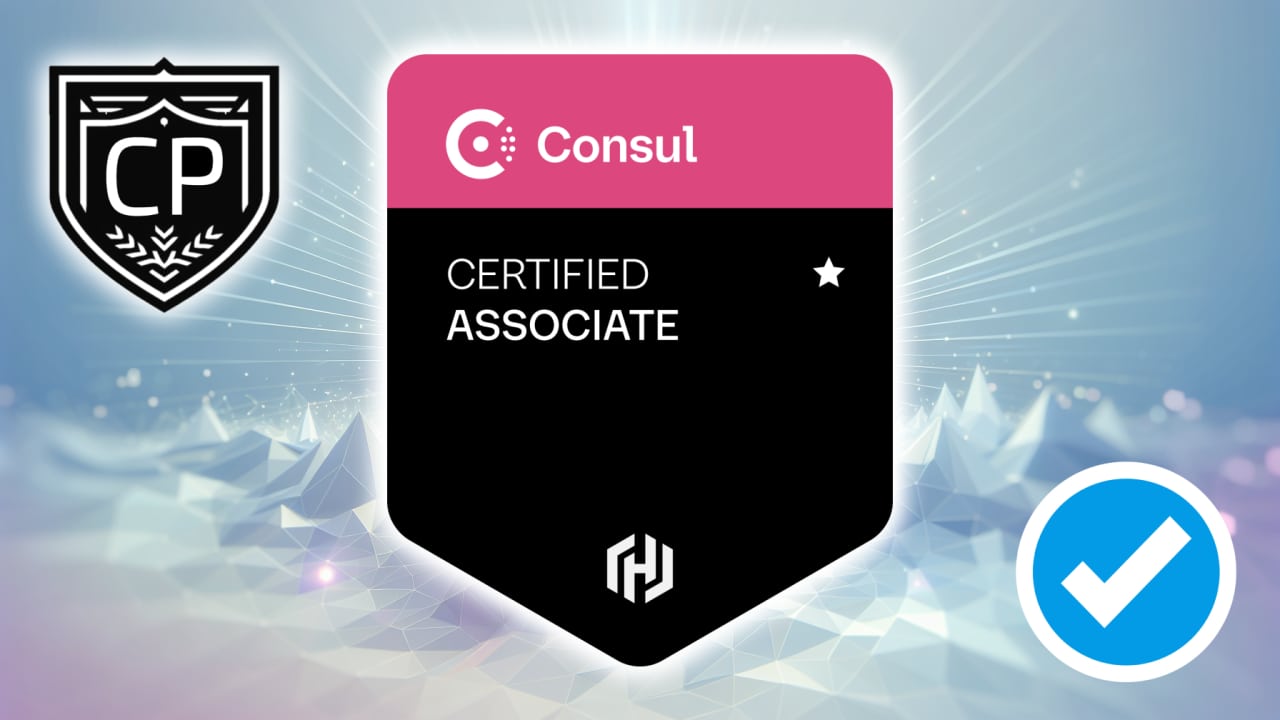
The HashiCorp Certified Consul Associate exam helps professionals build confidence in their ability to design, secure, and operate modern service networking workflows. This overview gives you a clear path to understanding the key topics and concepts so you can prepare thoughtfully and approach your exam with assurance.
What will you gain from earning the HashiCorp Certified Consul Associate certification?
The HashiCorp Certified Consul Associate certification validates your ability to deploy, manage, and secure Consul in real-world environments. This credential demonstrates your understanding of service discovery, automation, network segmentation, ACL management, and service mesh configuration. It is ideal for practitioners who design or operate cloud infrastructure, DevOps engineers integrating microservices, and platform teams building secure, dynamic networks with Consul.
Who Should Pursue the HashiCorp Certified Consul Associate Certification?
The HashiCorp Certified Consul Associate certification is perfect for professionals working in cloud operations, DevOps, or IT who want to validate their understanding of service networking using Consul. It is ideal for individuals who manage microservices, automate networking workflows, or work with Kubernetes and virtual machines.
Whether you’re a system administrator, network engineer, or developer aiming to strengthen your cloud-native networking expertise, this certification helps prove your ability to deploy, secure, and operate Consul in real-world environments.
What Are the Benefits of Earning the Consul Associate (003) Certification?
This certification signals to employers that you can confidently manage service discovery, service mesh, and network automation using HashiCorp Consul. Earning it demonstrates both operational awareness and hands-on skill, setting you apart from peers who only have theoretical knowledge.
Holders of this credential often gain leverage for new opportunities in infrastructure management, platform engineering, DevOps, and cloud automation. It can also serve as a stepping stone toward advanced HashiCorp certifications in Vault or Terraform.
How Many Questions Are on the Consul Associate Exam?
The exam includes 60 questions designed to measure real-world understanding of Consul. You’ll encounter multiple-choice and multiple-select questions that test your familiarity with topics such as Consul architecture, ACLs, network automation, and Consul service mesh.
Candidates should focus on both conceptual knowledge and hands-on skills. Having practice experience with Consul—either through local deployment or cloud-based labs—will help you interpret the scenarios with confidence.
How Long Is the Exam and What Is the Format?
The HashiCorp Certified Consul Associate exam gives you 60 minutes to complete all questions. It’s administered online via a secure proctoring service, allowing you to take it from home or the office.
Most questions are straightforward and practical, reflecting common use cases for deploying Consul, securing communication, and monitoring services. Time management is key, but the one-hour duration provides plenty of opportunity to read, reason, and select the best answers.
What Score Do I Need to Pass?
To earn your certification, you need to achieve a passing score of 70 percent or higher. Every question contributes to your final mark, so maintain consistent focus across all 10 exam domains rather than overstudying one area.
Because the scoring model is straightforward, strong fundamentals in each topic—like ACLs, agent communication, and service mesh concepts—will ensure you reach or exceed the required score comfortably.
How Much Does the Exam Cost?
The HashiCorp Certified Consul Associate exam costs $70.50 USD. Depending on your country or testing platform, additional local taxes may apply. This modest price makes it one of the most accessible certifications in the infrastructure and DevOps field.
It’s an excellent investment for showcasing your growing skills in service networking—a powerful capability as more companies adopt hybrid and multi-cloud strategies.
What Is the Current Version and Exam Code?
The current version of the exam is Consul Associate. It reflects the latest updates in Consul’s architecture, service mesh functionality, network automation, and multi-datacenter communication.
Always verify that your preparation materials match this version to ensure you’re studying the most up-to-date topics and objectives.
What Languages Is the Exam Offered In?
The Consul Associate exam is delivered in English. As HashiCorp expands its global certification presence, additional language options may become available through the exam provider in the future.
If English is your second language, you can still succeed by taking advantage of clear documentation, interactive labs, and study resources to reinforce comprehension.
How Difficult Is the Consul Associate Exam?
The Consul Associate exam is approachable with dedicated study and hands-on learning. It focuses on ensuring you understand Consul’s real-world functions rather than memorizing obscure theory.
If you’ve configured Consul agents, worked with service discovery, or explored service mesh security features, you’ll be well prepared. Even those new to HashiCorp products can do well with commitment and practical exercises.
What Domains and Topics Are Covered on the Exam?
The exam blueprint is divided into 10 key domains, each weighted evenly at about 10 percent:
- Understand the pillars of service networking
- Describe Consul architecture
- Deploy a single datacenter
- Register services and use service discovery
- Use Consul service mesh
- Secure agent communication
- Secure services with basic ACLs
- Secure and connect service mesh applications
- Monitor Consul
- Operate and maintain Consul
Every domain builds toward validating your ability to install, configure, secure, and observe Consul in a production or test environment.
What Jobs Can You Qualify For After Earning the Certification?
Completing the Consul Associate exam opens opportunities in roles such as:
- Service Networking Engineer
- DevOps Engineer
- Cloud Infrastructure Specialist
- Platform Engineer
- Site Reliability Engineer (SRE)
- Network Automation Specialist
Because Consul integrates with Terraform, Nomad, and Vault, your certification also strengthens cross-HashiCorp skillsets that are highly desirable in enterprise DevOps teams.
Is Any Prior Experience Needed?
There are no formal prerequisites to take the Consul Associate exam. However, HashiCorp recommends familiarity with Consul fundamentals, either through documentation or practical experimentation.
Experience deploying Consul with VMs or Kubernetes, configuring intentions, and setting up ACLs will dramatically improve your comfort level with test questions. Even basic local experimentation counts as great practice.
How Can I Prepare Effectively?
A proven way to prepare is through hands-on practice and clear study goals. You can:
- Follow HashiCorp’s tutorials to explore every domain objective
- Review documentation and experiment with the CLI commands
- Take realistic practice questions, like those in this Consul Associate practice exam collection to test your readiness and reinforce weak areas
Consistency is key—blend tutorials, labs, and mock exams for the best learning results.
Is This Certification Good for Beginners?
Yes. The HashiCorp Certified Consul Associate certification is a fantastic starting point if you want to enter the ecosystem of distributed systems and service networking. It introduces you to important concepts like service registration, mesh security, and ACLs in manageable depth.
Beginners who complete this certification gain valuable insight into networking automation and leave with skills directly applicable to real infrastructures.
How Long Is the Certification Valid?
The Consul Associate certification does not expire automatically, but HashiCorp periodically updates exams when significant product releases or features are introduced. When a new version is released, certified professionals can choose to upgrade by retaking the latest version of the exam.
This ensures your certification continues to reflect relevant, current Consul knowledge aligned with modern best practices.
What Learning Resources Are Best to Use?
Combine guidance from multiple reliable sources:
- The HashiCorp Learn tutorials for Consul, especially the certification prep track
- Consul’s official documentation and CLI guide
- Online study groups and community discussions
- Instructor-led training sessions when available
Hands-on experimentation in a local or cloud environment can make complex networking and service mesh topics far easier to grasp intuitively.
How Is the Exam Delivered?
You can take the exam online from anywhere through HashiCorp’s testing partners. A quiet environment, webcam, and reliable internet connection are required for online proctoring. Some test-takers also have access to in-person testing centers where available.
The flexibility to choose your exam setup helps make certification more accessible to professionals working remotely or internationally.
What Are the Exam Domains I Should Focus on Most?
While each of the ten domains carries equal weight, pay special attention to:
- Service Mesh: Intentions, proxies, and gateways
- ACLs and Security: Policy management and token use
- Operations: Backup, restore, and monitoring with logs and metrics
Reviewing the official tutorials and practicing key commands like consul join, consul catalog services, and ACL token creation ensures you’re ready for any scenario question.
How Does the Consul Certification Compare to Other HashiCorp Exams?
Among HashiCorp’s Associate-level exams, the Consul certification specializes in service networking and connectivity, while Terraform focuses on infrastructure as code, and Vault centers on security and secrets management.
Many professionals pursue multiple certifications across HashiCorp products to gain a complete DevOps toolkit. Consul Associate lays a strong networking foundation that complements both Vault and Terraform expertise.
Where Can I Learn More or Register Officially?
For complete details about exam registration, study paths, and sample questions, visit the official HashiCorp Certified Consul Associate certification page. There, you’ll find learning tutorials, hands-on guides, and direct registration links to begin your certification journey.
By preparing thoroughly and practicing regularly, you’ll confidently demonstrate your ability to manage modern service networking with HashiCorp Consul—an in-demand and respected skill across today’s cloud-driven organizations.