Table of Contents
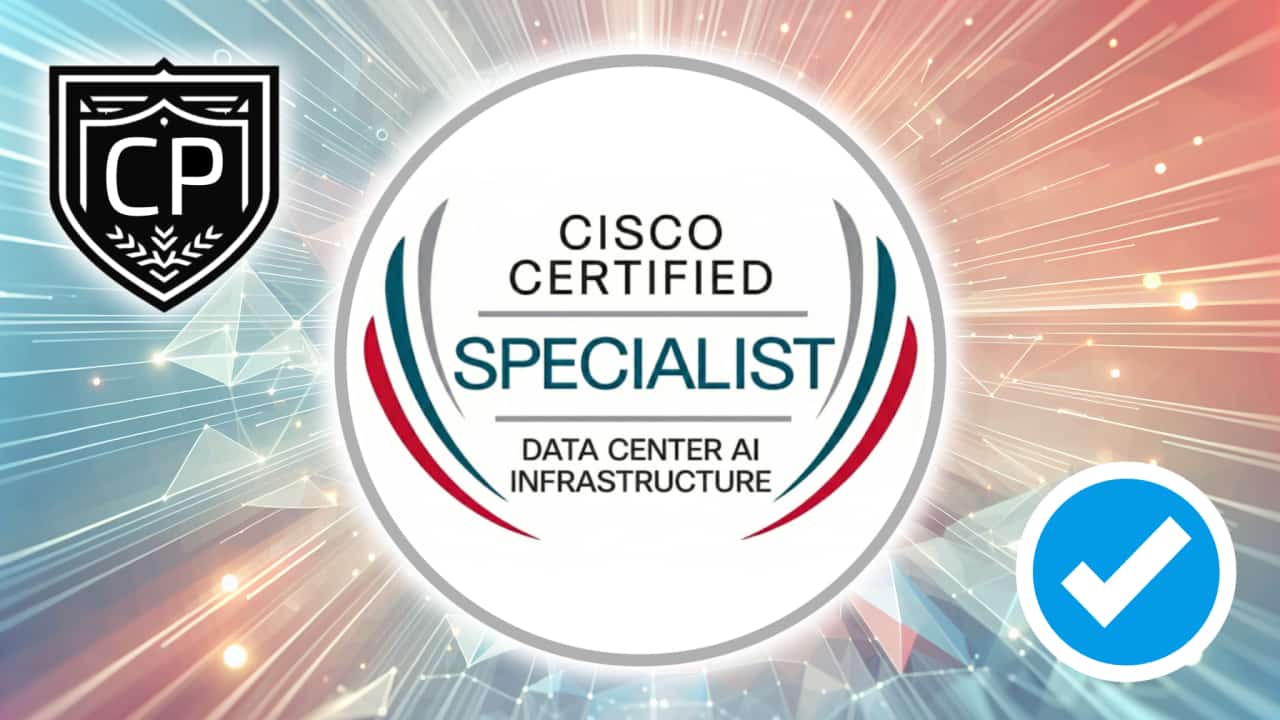
Cisco Certified Specialist Data Center AI Infrastructure Quick Facts
Achieving deep expertise in AI-ready data center environments opens exciting new possibilities for innovation and career advancement. This exam overview provides a clear roadmap to help you confidently prepare for the Cisco Certified Specialist Data Center AI Infrastructure certification and master the technologies powering next-generation AI workloads.
Exploring the Cisco Certified Specialist Data Center AI Infrastructure Certification
The Cisco Certified Specialist Data Center AI Infrastructure certification validates your ability to design, deploy, and operate the robust, high-performance environments required to support modern AI workloads. It focuses on integrating compute, storage, networking, and orchestration technologies across Cisco’s AI-ready ecosystem, including Nexus, UCS, Intersight, and Hyperfabric AI. This credential is ideal for data center professionals, AI infrastructure engineers, and systems architects seeking to lead adoption of AI-driven operations at scale.
Who Should Pursue the Cisco Certified Specialist – Data Center AI Infrastructure Certification?
The Cisco Certified Specialist – Data Center AI Infrastructure (300-640 DCAI) certification is perfect for IT professionals looking to enhance their knowledge of AI-ready data center design, deployment, and management. It’s designed for:
- Data center administrators and network engineers advancing into AI infrastructure
- Systems engineers and solution architects focusing on AI workloads
- Cloud and hybrid data center professionals integrating AI capabilities
- IT consultants and operations managers overseeing high-performance infrastructure projects
Whether you’re expanding your expertise in Cisco technologies or entering the AI infrastructure space, this certification validates the advanced skill set that today’s intelligent data centers demand.
What Career Opportunities Can This Certification Help Unlock?
Earning your Cisco Data Center AI Infrastructure Specialist certification demonstrates your ability to build, manage, and troubleshoot AI-intensive ecosystems—an area rapidly growing in demand. Roles this certification supports include:
- AI Infrastructure Engineer
- Data Center Engineer or Administrator
- Cloud Integration Specialist
- AI Systems Architect
- Network Automation Engineer
This certification also strengthens your career path toward the CCNP Data Center certification, enabling broader specialization across Cisco technologies.
What Exam Code and Version Should I Know About?
The official exam code is 300-640 DCAI, currently at version 1.0. This version reflects Cisco’s modernized approach to supporting AI workloads with efficiency, scalability, and intelligence in the data center.
How Long Do You Have to Complete the Exam?
The DCAI 300-640 exam allows you 90 minutes to complete all questions. The timeframe gives you ample opportunity to analyze each scenario carefully and apply your understanding of Cisco’s AI infrastructure technologies effectively.
How Much Does the Cisco Data Center AI Infrastructure Exam Cost?
The exam fee is $300 USD. Cisco also allows candidates to use Cisco Learning Credits, which can be an excellent option for organizations or professionals with training budgets earmarked for certification growth.
How Many Questions Are There on the DCAI Exam?
You’ll face 65 questions across multiple domains. The format includes both multiple-choice and multi-select questions, with no case studies, ensuring a focused evaluation of your technical and conceptual knowledge.
What Type of Questions Can You Expect?
Cisco uses a mix of multiple-choice and multi-select questions to assess your abilities. Expect scenario-based prompts about system configuration, network evaluation, or troubleshooting high-performance AI environments. The questions test both theory and applied understanding of Cisco’s AI ecosystem.
What Language Is the Exam Offered In?
The Cisco 300-640 DCAI exam is currently available in English. While English fluency is recommended, the terminology used aligns with Cisco best practices and technical documentation standards, making it accessible for global learners.
What Score Do You Need to Pass?
To pass, you’ll need a score of approximately 825 out of 1000, or about 83%. The score reflects Cisco’s commitment to ensuring certified professionals maintain a deep and practical grasp of AI infrastructure technologies within complex data centers.
How Difficult Is the Cisco DCAI 300-640 Certification Exam?
This exam is designed for professionals experienced with Cisco infrastructure technologies and AI workloads. Candidates should be comfortable with data center operations, networking configurations, and the components that enable high-performance AI workloads. With thoughtful preparation and top-rated Cisco Certified Specialist Data Center AI Infrastructure practice exams, you can build the confidence needed to succeed on your first attempt.
What Are the Core Domains, and How Are They Weighted?
The Cisco DCAI exam blueprint emphasizes four major content areas:
-
AI Fundamentals and Applications
-
AI Infrastructure Components and Architecture
-
AI Infrastructure Deployment and Data Management
-
AI Infrastructure Operations and Troubleshooting
What Knowledge Areas Should You Master Before Taking the Exam?
To fully prepare, focus on understanding how Cisco technologies integrate across AI workloads. Prioritize:
- Network performance optimization with PFC, ECN, and QoS
- Compute and GPU provisioning in Cisco UCS environments
- Storage design for AI scale-out architecture
- Operational telemetry and real-time monitoring via Cisco Intersight and Nexus Dashboard
These areas form the backbone of the modern AI data center infrastructure.
Does This Certification Expire?
Yes. Cisco certifications are generally valid for three years. To maintain your credential, you can retake the exam, pass a higher-level Cisco certification, or earn Continuing Education credits that count toward recertification.
Which Cisco Training Courses Can Help You Prepare?
Cisco recommends the following instructor-led courses to gear up for the exam:
- AI Solutions on Cisco Infrastructure Essentials (DCAIE)
- Operate and Troubleshoot AI Solutions on Cisco Infrastructure (DCAIAOT)
These courses focus on building, operating, and securing AI-focused architectures across Cisco systems.
What Tools and Platforms Should You Be Familiar With?
Candidates should be comfortable with:
- Cisco Nexus Dashboard for infrastructure orchestration
- Cisco Intersight for hybrid cloud management and observability
- Cisco UCS for compute policy control
- Cisco APIC and Hyperfabric AI for fabric automation and workload deployment
Understanding the interplay between these platforms is key to achieving high-performance AI infrastructure.
How Are Cisco DCAI Skills Relevant in the Modern Data Center?
As AI workloads become core to enterprise operations, efficient and scalable infrastructure has never been more important. The Cisco Data Center AI Infrastructure certification validates your ability to design data centers capable of powering advanced analytics, generative AI, and ML pipelines with speed and reliability. These skills are increasingly sought by global organizations investing in digital transformation.
What Experience Level Is Recommended Before Attempting the Exam?
Cisco recommends candidates have intermediate to advanced experience managing data centers or networking systems. Understanding virtualization, fabric management, and AI workload deployment gives you a strong foundation to approach the DCAI certification with confidence.
What Technologies Are Covered in the DCAI Curriculum?
Key technology areas include:
- AI Compute and GPU technologies like NVLink and virtualization
- Data center networking including RDMA, RoCEv2, and congestion control
- Storage optimization using SAN, NVMe, and Fibre Channel
- Automation and orchestration tools for AI workload deployment and scaling
A balanced understanding of each of these technologies ensures readiness for real-world AI data operations.
Are There Prerequisites for Taking the Cisco 300-640 Exam?
There are no mandatory prerequisites. However, familiarity with Cisco data center technologies and AI-enabled networking concepts is highly recommended. The exam also contributes toward the CCNP Data Center concentration requirements, making it a valuable part of a broader Cisco certification journey.
How Can You Register for the Cisco DCAI 300-640 Exam?
Registration is quick and flexible through the Cisco Certification portal or Pearson VUE testing centers. You can choose either an online proctored exam or in-person testing location based on your preference. Ensure your testing environment meets all Cisco exam guidelines before starting.
What Comes After the DCAI Certification?
After earning your Cisco Data Center AI Infrastructure Specialist certification, you might advance toward:
- CCNP Data Center Certification for enterprise infrastructure mastery
- Cisco Specialist in Data Center Core Technologies (DCCOR)
- AI and Machine Learning specialization tracks expanding your design and implementation expertise
Each step builds on your proven knowledge, opening new opportunities across networking, automation, and hybrid infrastructure.
Where Can You Learn More and Register Officially?
For the most accurate details on exam policies, scheduling, and Cisco’s official learning path, visit the official Cisco Certified Specialist Data Center AI Infrastructure exam page.
The Cisco Certified Specialist – Data Center AI Infrastructure exam is a gateway to mastering the infrastructure that powers today’s most advanced AI systems. With solid preparation and hands-on practice, you’ll gain one of the most forward-looking credentials Cisco offers—positioning yourself at the forefront of AI and data center innovation.