Table of Contents
Cisco AI Technical Practitioner Quick Facts
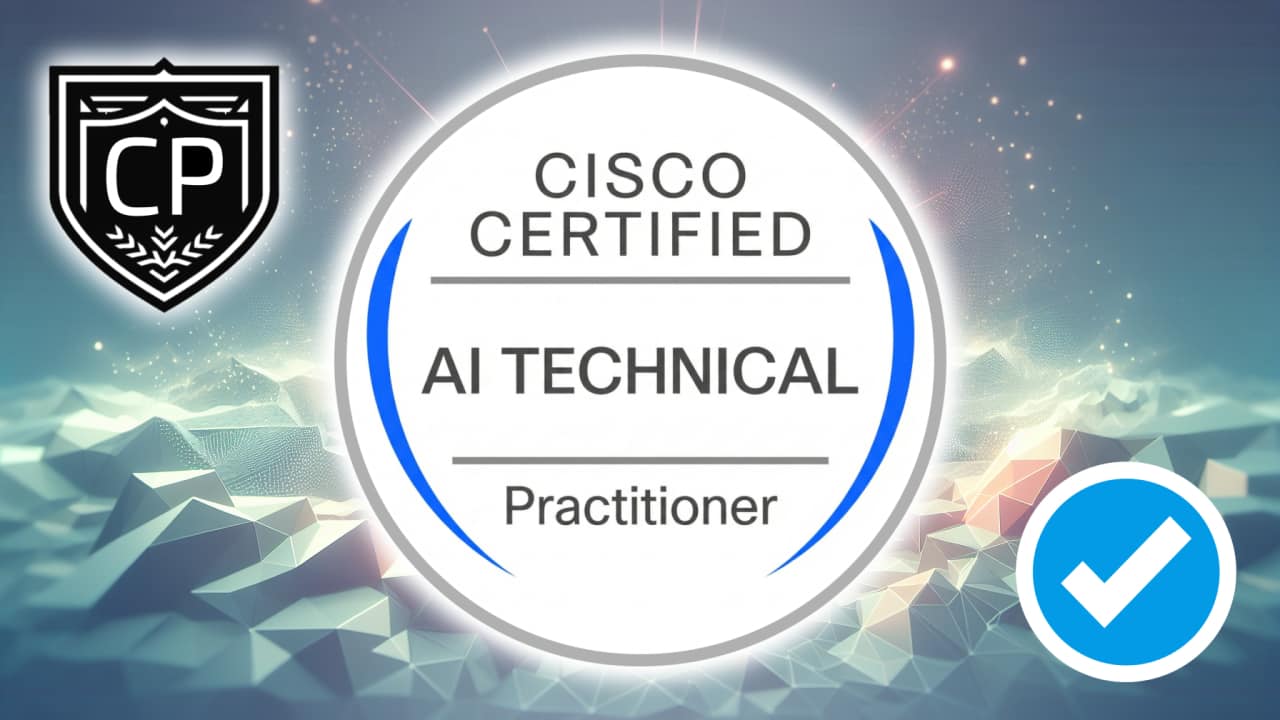
The Cisco AI Technical Practitioner certification empowers professionals to confidently build, integrate, and manage AI-driven solutions. This overview provides everything you need to understand the exam’s structure, ensuring you move forward with focus and success in your AI career journey.
Exploring the Cisco AI Technical Practitioner Certification
The Cisco AI Technical Practitioner certification validates your foundational knowledge of artificial intelligence as applied to real-world networked and business environments. It assesses your ability to select and integrate generative AI tools, design responsible AI systems, and manage AI-driven workflows aligned with Cisco’s innovation priorities. Whether you are a technical specialist, solution engineer, or IT professional, this certification demonstrates your fluency with the core models, security principles, and automation concepts that support Cisco’s vision of secure, intelligent enterprises.
Who Should Pursue the Cisco AI Technical Practitioner Certification?
The Cisco AI Technical Practitioner certification (810-110 AITECH) is perfect for technology professionals eager to build practical AI competency. This includes IT and network engineers, data analysts, AIOps specialists, solution architects, technical leads, project managers, and business analysts aiming to leverage AI within their workflows.
It’s also ideal for anyone ready to move from basic AI awareness to full technical fluency in designing, implementing, and optimizing AI-powered systems. Whether you’re a technologist, developer, or enterprise innovator, this certification validates your ability to harness AI across business and technical domains.
What Does the Cisco AI Technical Practitioner (AITECH) Certification Cover?
The AITECH certification focuses on skills that help professionals bridge the gap between theory and practical AI application. You’ll develop a strong foundation across six areas: Generative AI Models, Prompt Engineering, Ethics & Security, Data Research & Analysis, Development & Workflow Automation, and Agentic AI.
These domains are designed to align with modern use cases—from building safe and effective AI systems to integrating generative and agentic workflows that automate real-world processes. Cisco built this program for doers—those ready to design AI-enabled solutions that make teams faster, smarter, and more creative.
What Jobs Can You Get After Earning the Cisco AI Technical Practitioner Certification?
This certification opens doors across technical and leadership roles centered around AI solutioning and workflow automation. Certified professionals often pursue positions such as:
- AI Technical Specialist or Engineer
- AI Workflow Designer
- Network or IT Automation Engineer
- Data Analyst with AI Integration Focus
- Technical Lead or AI Project Manager
- AIOps or AI Infrastructure Specialist
It’s a strong differentiator for professionals leading the adoption of generative and agentic AI technologies in enterprise environments.
How Is the 810-110 AITECH Exam Structured?
You’ll face approximately 55 multiple-choice and multi-select questions during this 60-minute exam. The questions blend conceptual understanding with applied knowledge, testing your ability to identify appropriate AI methods and strategies in context.
There are no case studies in this exam, focusing instead on practical, scenario-based questions that evaluate your AI reasoning and technical decision-making.
How Much Does the Cisco AI Technical Practitioner Exam Cost?
The exam cost is $300 USD, which is standard for Cisco’s professional-level certifications. Prices can vary depending on your region and local taxes, but registering early ensures you secure your preferred testing time and location.
What’s the Passing Score for the 810-110 AITECH Exam?
To pass, candidates typically need a scaled score of around 825 out of 1000 (roughly 83%). Cisco uses a variable scoring model to ensure fairness across different question sets. This means your total result, not individual domain performance, determines whether you pass.
In What Languages Is the Cisco AITECH Exam Available?
Currently, the Cisco AI Technical Practitioner exam is offered in English. Additional languages may be added in the future as the certification expands to global markets.
Are There Any Prerequisites?
There are no formal prerequisites, making this an accessible entry ramp into AI specialization. However, basic comfort with technical systems, data handling, and scripting workflows can enhance your preparation. Cisco recommends learners have some exposure to IT or software environments before diving into AI automation topics.
How Long Is the Cisco AI Technical Practitioner Certification Valid?
Cisco certifications typically remain valid for three years. To maintain your credential, you can either retake the current exam version or progress to more advanced Cisco AI certifications within the same track.
What Domains and Topics Are Included in the AITECH Exam?
The blueprint divides the exam into six weighted domains you should focus on when preparing:
-
Generative AI Models
-
Prompt Engineering
-
Ethics and Security
-
Data Research and Analysis
-
Development and Workflow Automation
-
Agentic AI
How Can I Best Prepare for the Cisco AITECH Certification Exam?
Cisco encourages candidates to take the Cisco AI Technical Practitioner (AITECH) Learning Path, which walks through all domain topics with practical labs and AI project applications.
To further boost your readiness and confidence, use the best Cisco AI Technical Practitioner practice exams that simulate real test conditions and provide in-depth explanations for every question.
Which Version of the Cisco AITECH Exam Should You Take?
The current and most up-to-date version is 810-110 AITECH v1.0. Always select the latest exam version during registration to ensure your results reflect the newest standards and competencies expected in AI-augmented roles.
What Are the Key Skills You’ll Learn from This Certification?
By completing this certification, you’ll develop essential technical and strategic abilities, including:
- Automating business and IT workflows using AI
- Building effective generative AI prompts for coding, writing, and analytics
- Designing Retrieval-Augmented Generation (RAG) systems
- Applying security and governance principles to enterprise AI projects
- Managing AI system lifecycle from prototyping to production
These skills are future-forward and directly tied to real-world enterprise needs in AI-enabled innovation and operations.
What Are Common Study Mistakes Candidates Should Avoid?
To maximize your learning efficiency, keep these common oversights in mind:
- Underestimating hands-on experience: Working through live AI tools or labs helps reinforce key concepts.
- Overlooking ethics and governance topics: These make up a crucial percentage of the exam.
- Ignoring the Agentic AI domain: A relatively new concept that often appears in industry-specific questions.
Strategic study that balances both technical and responsible AI perspectives leads to better exam performance and long-term career benefit.
How Difficult Is the Cisco AI Technical Practitioner Exam?
The AITECH exam is approachable yet robust. It’s designed to validate not just knowledge, but application. If you spend time exploring Cisco’s labs and modern AI tools, you’ll find the questions intuitive and situational, reflecting the real decisions AI professionals make daily.
What Is the Format of the Questions on the 810-110 AITECH Exam?
All questions are multiple-choice (single answer) or multi-select (multiple answer). Each question tests your understanding of AI principles and practical decision-making. There are no essay or case study questions, allowing you to focus on precision and understanding rather than lengthy narratives.
How Should You Schedule and Take the Cisco AITECH Exam?
Candidates can take the exam online or at a certified Pearson VUE testing center. The online option allows remote proctoring from the comfort of your home, while test centers offer a traditional environment. Choose whichever setting helps you feel most focused and confident.
How Will This Certification Impact Your Career Growth?
The Cisco AI Technical Practitioner credential signals practical expertise in a high-demand field. Employers value this certification for roles requiring automation, data-driven innovation, and responsible AI leadership. It’s an investment in your future growth and a gateway to advanced AI certifications and leadership opportunities within Cisco’s AI ecosystem.
How Can You Maintain and Grow Your AI Expertise After Certification?
Continue expanding your skills through projects, AI development communities, and Cisco’s advanced certifications. Cisco’s AI learning paths build progressively, keeping your expertise current as AI technologies evolve rapidly.
Where Can I Register for the Official Cisco AI Technical Practitioner Exam?
To register or explore Cisco’s full set of preparation tools, visit the official Cisco AI Technical Practitioner certification page. There you’ll find course details, schedule options, and registration links to start your certification journey.
The Cisco AI Technical Practitioner certification (810-110 AITECH) is a powerful way to demonstrate that you can integrate AI into the workflows, systems, and teams shaping the future of technology. With consistent preparation, hands-on labs, and great practice exams, you’ll be ready to earn a credential that puts you at the forefront of the AI-driven workplace revolution.