Table of Contents
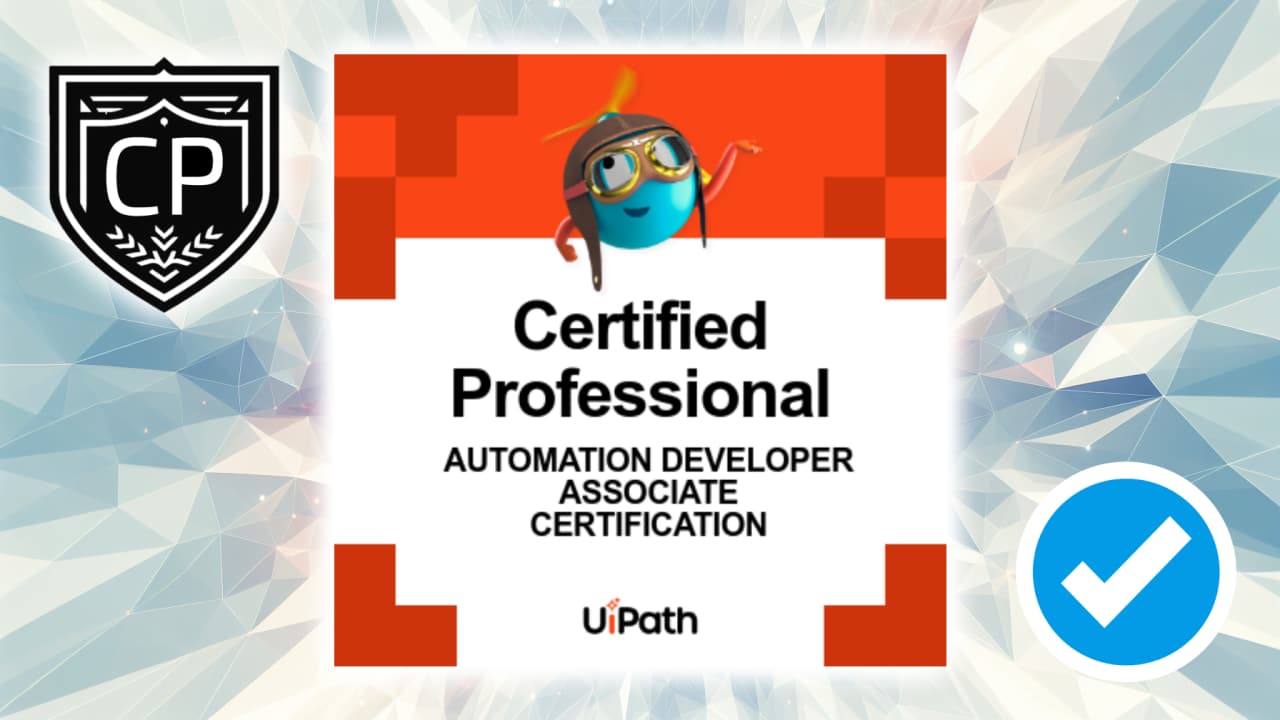
UiPath Certified Professional Automation Developer Associate Quick Facts
The UiPath Certified Professional Automation Developer Associate exam empowers you to demonstrate your ability to build, deploy, and manage automation solutions that enhance business performance. This overview provides the essential guidance you need to prepare with clarity and confidence.
How does the UiPath Automation Developer Associate certification help you grow your automation career?
The UiPath Certified Professional Automation Developer Associate validates your understanding of core UiPath products, automation fundamentals, and best practices for developing robust solutions. It is ideal for developers and professionals eager to transform their organizations through intelligent automation. Earning this certification showcases your ability to design efficient workflows using UiPath Studio, orchestrate processes with UiPath Orchestrator, and apply sound development methodologies that ensure reliability and scalability in automation projects.
Who should pursue the UiPath Certified Professional Automation Developer Associate certification?
The UiPath Certified Professional Automation Developer Associate certification is ideal for anyone eager to start a successful career in intelligent process automation. It is a great choice for individuals with an interest in working with AI-powered automation, robotic process automation (RPA), and UiPath technologies. Whether you are a junior automation developer, business analyst, system administrator, or a student preparing to enter the tech workforce, this certification helps you demonstrate real-world skills that employers value.
Even if you have no prior RPA experience, the UiPath learning ecosystem provides all the training you need to succeed. This certification shows you can build, deploy, and manage basic automation workflows confidently—perfect for teams exploring the potential of AI and automation.
What types of roles does the UiPath Automation Developer Associate certification unlock?
Earning this certification can open the door to a variety of early- to mid-level roles in automation and technology. Some of the most common career paths include:
- Automation Developer
- RPA Developer
- Automation Support Engineer
- Business Process Analyst
- UiPath Developer
- Automation Consultant
This certification also provides an excellent foundation for roles in solution architecture, automation project management, and AI integration. Many certified professionals also move on to advanced UiPath credentials such as UiPath Automation Developer Professional or Automation Solution Architect Professional.
Which version of the exam should I study for?
The current UiPath Certified Professional Automation Developer Associate exam follows the latest UiPath-ADAv1 exam code. This version aligns with UiPath 2024.10 platform capabilities, ensuring you’re tested on the newest tools and best practices in agentic and AI-powered automation. Always confirm that you’re studying for the most up-to-date version available directly on UiPath’s official certification portal.
How much does the UiPath Automation Developer Associate exam cost?
The cost of the UiPath-ADAv1 exam is $150 USD. Pricing may vary slightly depending on your region or taxes applied by Pearson VUE testing centers. UiPath occasionally offers discounts during global learning events or promotional periods, so it’s a good idea to check the official channels before scheduling your exam.
How many questions appear on the UiPath Certified Professional Automation Developer Associate exam?
The exam consists of 60 multiple-choice and multi-select questions. Each question is designed to assess your understanding of UiPath’s core automation tools and development principles. Every question counts toward your final score, so practice managing your time wisely. Questions often focus on real-world development tasks, such as building workflows, using variables, or configuring Orchestrator settings.
How long will I have to complete the UiPath-ADAv1 exam?
You’ll have 90 minutes to complete the exam. This timeframe allows you to read, analyze, and answer each question thoughtfully. It’s a good idea to quickly flag harder questions and come back to them later—especially since time management can help you maximize your performance on scenario-based questions.
What’s the passing score for the exam?
The passing score is 70%. This score ensures that candidates meet the required level of proficiency to design and build UiPath automations independently. Unlike scaled scores, the UiPath-ADAv1 passing criteria are straightforward—achieve at least 70% accuracy across your test responses, and you’ll earn your certification.
In which languages can I take the UiPath Automation Developer Associate exam?
Currently, the exam is available in both English and Japanese, reflecting UiPath’s global community of learners. This language flexibility allows you to choose the version that makes you most comfortable during the test. As UiPath continues expanding worldwide, additional languages may be introduced to support new regions.
How long is the certification valid?
The UiPath Certified Professional Automation Developer Associate credential is valid for 3 years. This ensures your knowledge stays aligned with UiPath’s evolving automation capabilities. To maintain your certification, you can retake the most current version of the exam or continue your learning by earning an advanced UiPath certification at the Professional or Specialist level.
What topics are covered on the UiPath Automation Developer Associate exam?
The UiPath-ADAv1 exam blueprint is divided into several domains that evaluate your ability to design effective automation solutions. The key domains include:
- Business Knowledge – Understanding automation value and agentic automation concepts
- Platform Knowledge – Knowing UiPath products, robot types, and Orchestrator fundamentals
- Studio Interface – Navigating UiPath Studio Web, compatibility modes, and unified build experiences
- Variables and Arguments – Creating, managing, and using variables, global constants, and arguments
- Data Manipulation and Control Flow – Structuring logical workflows using loops and conditional logic
- Orchestrator and Integration Service – Managing robots, assets, queues, triggers, and connectors
- UI Automation and Object Repository – Designing front-end automations using modern and classic UI activities
These domains align with the UiPath platform’s most essential skills, allowing employers to trust that certified professionals can contribute immediately to automation projects.
What are some must-know UiPath products and tools for the exam?
Candidates should have hands-on familiarity with core UiPath products, including UiPath Studio, UiPath Robots, and UiPath Orchestrator. You’ll also encounter questions related to Integration Service, AI Center, Action Center, and Document Understanding templates. Comfort with environments like Microsoft Excel, Outlook, DataTables, and version control tools such as Git is highly recommended, as these are common in real-world automation scenarios.
Are there prerequisites for taking the UiPath Certified Professional Automation Developer Associate exam?
There are no formal prerequisites for the UiPath-ADAv1 exam. However, UiPath recommends that candidates either complete the UiPath Automation Developer training or have around 6 months of hands-on RPA experience. Completing UiPath Academy’s official courses and practical labs will give you the confidence to approach the exam with a strong technical foundation.
How is the UiPath Automation Developer Associate exam structured?
The exam is entirely computer-based and delivered through Pearson VUE, UiPath’s authorized testing provider. You can take it either online with remote proctoring or in a physical Pearson VUE test center. Expect to encounter a mix of multiple-choice and multiple-response questions that assess theoretical understanding, workflow building, and troubleshooting.
How should I prepare for the UiPath-ADAv1 certification exam?
Preparation is most effective when combining guided learning with hands-on practice. Recommended steps include:
- Completing the Automation Developer Associate Training available through UiPath Academy
- Practicing projects in UiPath Studio and Orchestrator for real-world familiarity
- Reviewing official UiPath documentation at docs.uipath.com
- Reinforcing your learning with practice tests and labs
To measure your readiness, consider using realistic UiPath Automation Developer Associate practice exams like those available at UiPath Automation Developer Associate practice exams, which provide structured questions and detailed answer explanations.
What are some common mistakes to avoid on the UiPath Automation Developer Associate exam?
Many candidates underestimate the importance of practical experience. Avoid relying solely on theoretical study material. Practice building bots, debugging workflows, and publishing packages to Orchestrator. Another common oversight is neglecting domain topics like Version Control, Workflow Analyzer, and RPA Testing—which frequently appear on the test.
What is the recommended hands-on experience before taking the exam?
UiPath suggests candidates gain experience by:
- Building and debugging automation workflows
- Reviewing and enhancing existing processes
- Performing code reviews and quality checks
- Working on maintenance or bug-fixing tasks
- Creating automations that use Excel, PDFs, and email components
This type of preparation ensures you’re comfortable with tools you’ll use daily as an automation professional.
Is the UiPath Certified Professional Automation Developer Associate exam difficult?
The exam is built to measure your applied understanding, not just memorization. With consistent practice and the right preparation strategy, candidates often find the test to be an enjoyable learning milestone. The focus is on demonstrating your ability to design, test, and deliver automation solutions effectively.
Where can I take the UiPath-ADAv1 exam?
You can take the exam either online through Pearson VUE’s secure remote platform or in person at a certified testing center. Whichever option you choose, make sure to have a quiet testing environment and valid identification available on exam day.
How do I schedule my UiPath Certified Professional Automation Developer Associate exam?
Scheduling your exam is simple:
- Visit the Pearson VUE UiPath page
- Create or log into your Pearson VUE account
- Select the UiPath Certified Professional Automation Developer Associate (UiPath-ADAv1) exam
- Choose your preferred test format—online or at a testing center
- Pick a convenient date and submit payment
You’ll receive a confirmation email detailing your next steps and exam day instructions.
What official resources does UiPath provide to support certification candidates?
UiPath offers an extensive learning ecosystem that includes:
- UiPath Academy for free self-paced training
- Documentation and developer guides with workflow examples
- Community forums and events for networking and Q&A
- Practice tests and learning paths specifically designed for certification success
These resources are continuously updated to reflect current tools and best practices, ensuring you always have access to the most relevant training materials.
What’s the best next certification after achieving the UiPath Automation Developer Associate?
After earning your Associate credential, you can build on your expertise with professional-level certifications such as:
- UiPath Certified Professional Automation Developer Professional
- UiPath Certified Automation Solution Architect Professional
- UiPath Certified Software Testing Engineer Professional
Each of these certifications enhances your career potential by proving in-depth mastery of UiPath’s ecosystem and AI-driven automation principles.
Where can I learn more and enroll for the official UiPath Automation Developer Associate certification?
To explore full details, register for training, or schedule your exam, visit the official UiPath Certified Professional Automation Developer Associate certification page. There you’ll find updated program information, policies, and links to UiPath Academy courses that will guide you every step of the way.