Table of Contents
Oracle Cloud Infrastructure Data Science Professional Quick Facts
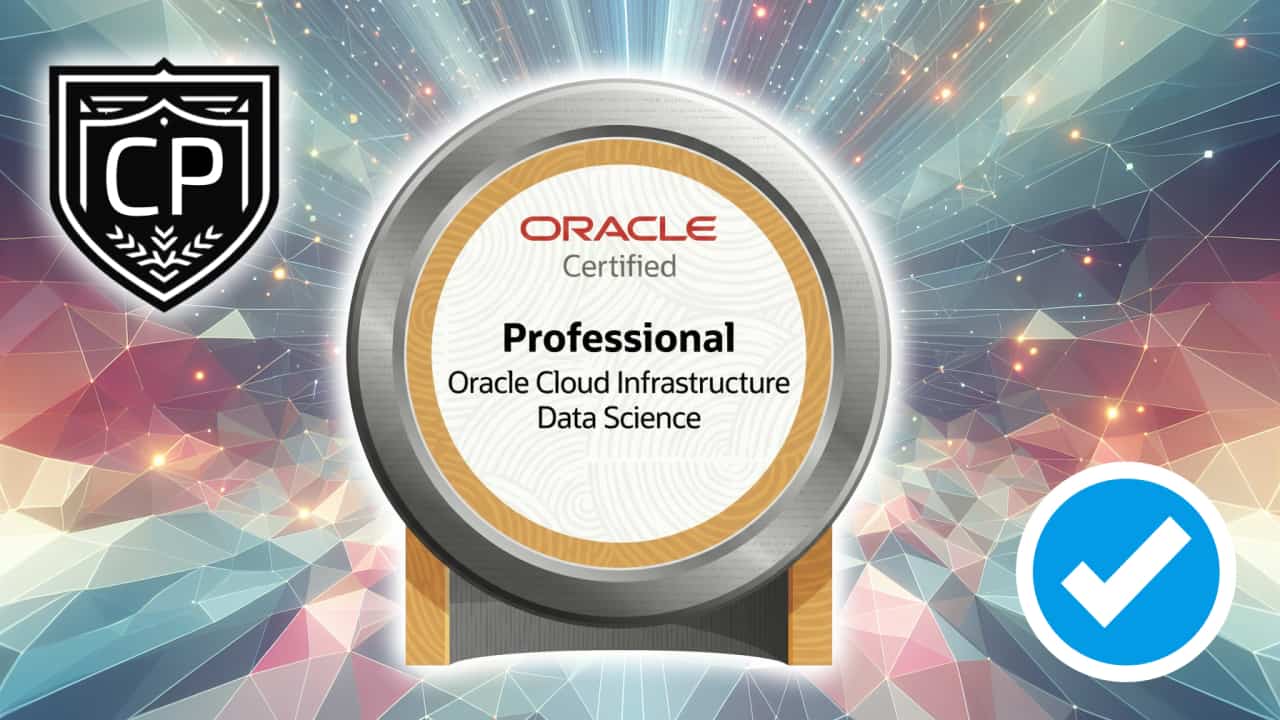
The Oracle Cloud Infrastructure (OCI) Data Science Professional certification empowers you to master the complete lifecycle of machine learning solutions on OCI. This overview provides clear insights, structure, and focus areas to help you prepare confidently and advance your expertise in enterprise-scale, cloud-based data science.
What does the Oracle Cloud Infrastructure Data Science Professional certification demonstrate?
This certification validates your ability to design, build, deploy, and manage machine learning solutions using OCI’s Data Science service and integrated ecosystem. It highlights your practical knowledge in leveraging the Accelerated Data Science (ADS) SDK, configuring secure and scalable workspaces, applying MLOps practices, and integrating with related OCI services such as Data Flow, Data Labeling, and Open Data. Earning this certification reflects your capability to lead end-to-end ML projects from data ingestion to deployment on Oracle Cloud.
Who Should Earn the Oracle Cloud Infrastructure Data Science Professional Certification?
The Oracle Cloud Infrastructure Data Science Professional Certification is designed for professionals who want to showcase their expertise in building, training, deploying, and managing machine learning models using Oracle Cloud. It’s perfect for:
- Data scientists working in enterprise environments
- AI and ML practitioners who want to leverage OCI’s managed machine learning platform
- Cloud engineers and architects expanding into data science
- Technical leaders responsible for implementing end-to-end AI solutions
- Professionals seeking advanced OCI credentials beyond foundational-level certifications
This certification represents mastery in data science workflows on Oracle Cloud, combining open-source capabilities with the powerful OCI ecosystem.
What Career Opportunities Can This Certification Unlock?
This professional-level certification positions you for highly rewarding, data-driven roles. With it, you can explore careers such as:
- Data Scientist
- Machine Learning Engineer
- MLOps Engineer
- AI Solutions Architect
- Cloud Data Engineer
Organizations increasingly rely on certified experts to develop and operationalize AI solutions. Holding this credential signals that you have both the theoretical understanding and the practical OCI experience to drive data science innovation in real-world projects.
Which Exam Version Should You Take?
Candidates should register for the most up-to-date Oracle Cloud Infrastructure exam: Exam 1Z0-1110-25. This version has been validated against Oracle Cloud Infrastructure 2025, ensuring that your knowledge aligns with the latest OCI capabilities across machine learning, MLOps, and generative AI integrations.
How Many Questions Are on the OCI 1Z0-1110-25 Exam?
You’ll encounter 50 multiple-choice questions in the exam. Expect a mix of concepts, scenario-based items, and practical questions assessing your ability to apply data science principles on OCI. Some questions may include multi-select options, so always choose all correct responses where applicable.
How Long Is the Exam?
The exam gives you 90 minutes to complete all questions. Managing your time effectively is key; allocate a few minutes per question to ensure you can review your answers before submission. The duration provides ample time if you’re familiar with OCI’s data science environment and workflows.
What’s the Passing Score for the Oracle Cloud Infrastructure Data Science Professional Exam?
To pass the OCI Data Science Professional (1Z0-1110-25) exam, you’ll need a minimum of 68%. This score demonstrates your proficiency in applying Oracle’s machine learning solutions to end-to-end workflows. Achieving this mark confirms that you can confidently operate within OCI’s data science ecosystem.
How Much Does the Oracle Cloud Infrastructure Data Science Professional Exam Cost?
The certification exam costs $245 USD. Depending on your region, applicable taxes may vary. Oracle often provides learning subscriptions and discounts to organizations, students, and returning certification holders, making it a worthwhile investment in your cloud career.
What Language Is the Exam Offered In?
Currently, the Oracle Cloud Infrastructure Data Science Professional exam is available in English. As Oracle expands its global training reach, additional language options may be introduced in the future, so always check the official Oracle site for updates before scheduling.
What Topics Are Covered in the Oracle Cloud Infrastructure Data Science Certification?
The exam blueprint is divided into five major content areas:
-
OCI Data Science - Introduction & Configuration
-
Design and Set Up Data Science Workspace
-
Implement End-to-End Machine Learning Lifecycle
-
Apply MLOps Practices
-
Use Related OCI Services
These domains measure your ability to execute all stages of the machine learning journey using OCI’s data science tools.
Are There Any Prerequisites?
While there are no strict prerequisites, Oracle recommends that candidates possess:
- Hands-on experience with OCI Data Science and related services
- Understanding of machine learning principles and lifecycle practices
- Familiarity with open-source ML frameworks and MLOps concepts
Practical knowledge gained through labs and field work will give you a significant edge when taking the exam.
What Skills Should You Focus on Before Taking the Exam?
To maximize your success, build practical expertise in the following areas:
- Configuring an OCI tenancy for data science workloads
- Creating and managing notebook sessions and Conda environments
- Training, evaluating, and deploying ML models
- Implementing AutoML, ADS SDK, and OCI Generative AI APIs
- Building MLOps pipelines with automation and monitoring tools
- Using OCI Vault, Data Labeling, and OCI Data Flow
The best way to master these skills is through hands-on practice with OCI’s Data Science platform.
How Is the OCI Data Science Professional Exam Structured?
The exam follows a multiple-choice format, including both single-answer and multiple-answer questions. Each question tests your ability to translate real-world ML and MLOps challenges into OCI-based solutions. Be prepared for scenario-based items that require applied understanding of data workflows.
What Is the Certification Validity Period?
Oracle certifications are subject to the Cloud Recertification Policy, which ensures your credential reflects the latest Oracle Cloud versions. This means your certification remains valid as long as the associated product version (OCI Data Science 2025) is active. You can stay certified by completing future recertifications through Oracle University.
How Can You Prepare for the Oracle Cloud Infrastructure Data Science Professional Exam?
Preparation combines both theoretical and practical learning. Oracle recommends:
- Official Training – The Become an OCI Data Science Professional course provides structured instruction and labs.
- Hands-On Practice – Get real-world OCI experience through interactive labs and projects.
- Study Guides and Documentation – Review OCI documentation and ADS SDK guides.
- Practice Exams – Reinforce your knowledge with realistic practice questions.
Boost your readiness by using top-rated Oracle Cloud Infrastructure Data Science Professional practice exams that mirror the actual testing environment and provide detailed feedback to help you improve confidently.
How Demanding Is the Oracle Cloud Infrastructure Data Science Professional Exam?
This certification is designed for professionals comfortable with both cloud and machine learning concepts. Candidates should understand data pipelines, feature engineering, model lifecycle management, and service integrations. With preparation and real-world exposure, most learners find the exam a fulfilling milestone in their cloud journey.
What’s Included in the ML Lifecycle Portion of the Exam?
The Implement End-to-End Machine Learning Lifecycle domain covers nearly half of the exam weight. You’ll demonstrate your ability to:
- Work with multiple data sources
- Clean and preprocess data
- Build, train, and evaluate models
- Use AutoML and explainability tools
- Deploy and manage models in production
This section highlights your competence in managing the entire data science process on OCI.
What Are MLOps Practices Tested in the Exam?
Expect to prove your understanding of OCI’s comprehensive MLOps framework, including:
- Job creation and scheduling
- Automating workflows with pipelines
- Autoscaling model deployments
- Monitoring model performance and logging metrics
The goal is to ensure candidates can manage ML operations that are scalable, reliable, and maintainable across cloud workloads.
What Are Related OCI Services You Should Know?
Beyond core data science, you should understand how OCI connects various services for data projects:
- OCI Data Flow for running Spark applications
- OCI Open Data Service for accessing publicly available datasets
- OCI Data Labeling for creating and exporting datasets
Integrating these services enhances your ability to create complete, production-ready machine learning systems.
How Long Should You Prepare for the OCI Data Science Professional Certification?
The ideal preparation timeline varies depending on prior experience. Candidates with strong machine learning backgrounds typically spend 4–8 weeks preparing, while those new to OCI may need additional time to complete training courses and hands-on labs. Consistency is more important than speed—commit to steady daily learning.
How Do I Register for the Oracle Cloud Infrastructure Data Science Professional Exam?
Registration is simple through Oracle University’s platform. You can purchase your exam and redeem it within six months. When ready, you can schedule your test either online or at a Pearson VUE testing center near you.
Where Can I Learn More and Schedule My Exam?
For official details, registration, policies, and schedule options, visit the Oracle Cloud Infrastructure Data Science Professional Certification page. This page also includes links to recommended training and learning subscriptions.
The Oracle Cloud Infrastructure Data Science Professional Certification is a gateway to mastering AI and machine learning on Oracle Cloud. With structured preparation, real-world practice, and focus on practical application, you’ll soon join the ranks of Oracle-certified data professionals shaping the future of intelligent cloud innovation.