Table of Contents
NREMT Emergency Medical Responder EMR Quick Facts
The NREMT Emergency Medical Responder (EMR) certification opens the door to serving your community with confidence and care. This overview gives you a clear, encouraging roadmap to understand the EMR exam and what it takes to demonstrate your readiness as a first responder.
How the EMR Certification Builds the Foundation of Emergency Medical Care
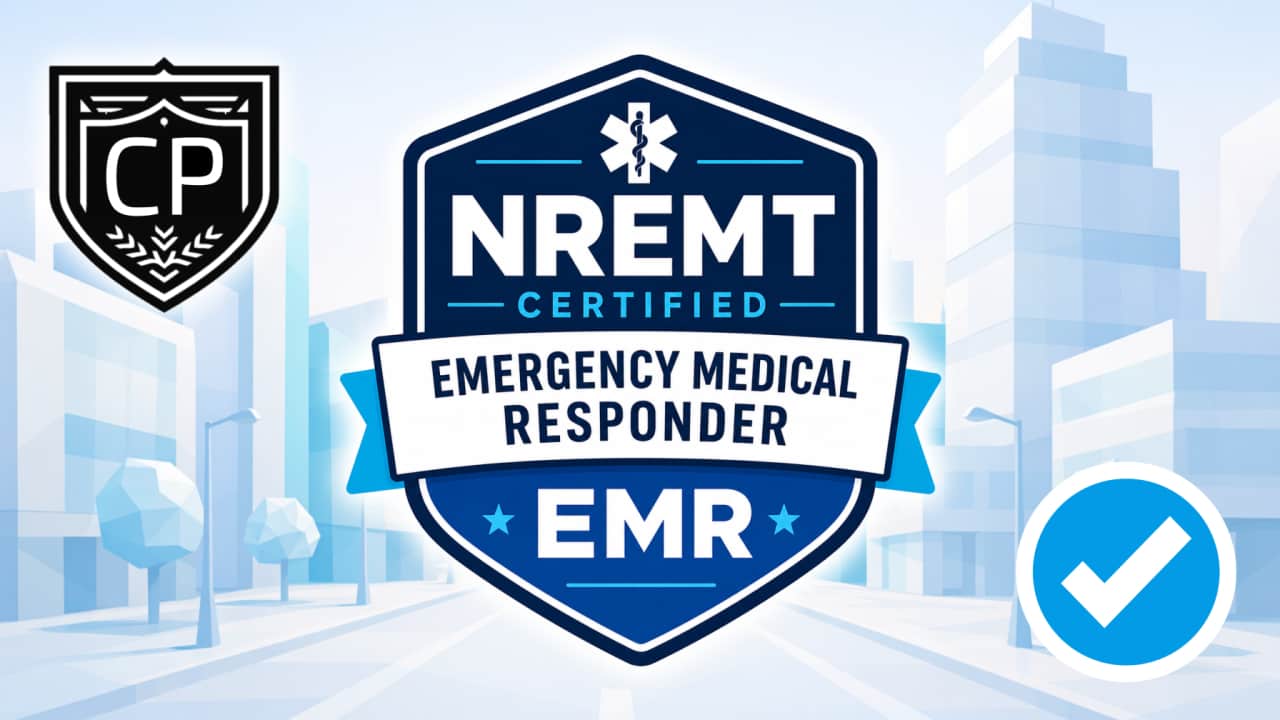
The NREMT Emergency Medical Responder certification validates essential knowledge and practical understanding needed to provide life-saving support before higher levels of EMS arrive. Designed for those who serve as the critical first link in the emergency response chain, this certification demonstrates proficiency in patient assessment, scene safety, basic treatment, and coordination with EMS teams. With its focus on immediate care and responder professionalism, the EMR credential affirms your readiness to act effectively and compassionately when every second counts.
Who Should Earn the NREMT Emergency Medical Responder (EMR) Certification?
The National Registry Emergency Medical Responder (EMR) certification is designed for individuals who want to be first on the scene and provide critical lifesaving care before advanced medical help arrives. It’s a perfect entry point for those beginning their journey in emergency medical services.
This credential is ideal for:
- First responders in fire, police, or rescue roles
- Lifeguards, security officers, and safety team members
- Community volunteers who support local emergency response
- Individuals beginning EMS, nursing, or public safety education
Holding this certification shows that you have the specialized knowledge and skills to stabilize life-threatening situations while awaiting higher-level EMS support.
What Career Opportunities Can the EMR Certification Open?
While EMR certification is often the foundation of an EMS career, certified responders play vital roles in many emergency and safety environments. EMRs can work or volunteer with:
- Fire departments
- Law enforcement agencies
- Event and industrial safety teams
- Campus or corporate emergency response groups
- Wilderness rescue or park services
Many EMRs go on to become Emergency Medical Technicians (EMTs), paramedics, or even nurse practitioners. The EMR certification helps you build confidence, field experience, and a strong professional network in prehospital care.
What Is the Purpose of the NREMT EMR Exam?
The EMR certification exam is intended to confirm that candidates can safely provide entry-level prehospital emergency medical care. It ensures each EMR can assess, manage, and stabilize emergencies with professionalism and confidence.
By passing this exam, candidates demonstrate the ability to:
- Perform a complete scene size-up and ensure safety
- Identify immediate life threats
- Manage basic airway, breathing, and circulation challenges
- Provide essential interventions and communicate findings
- Collaborate effectively with arriving EMS personnel
This certification not only validates technical skills but also reinforces ethical standards and public trust in emergency response.
How Much Does the NREMT EMR Certification Exam Cost?
The exam costs $88 USD. Fees are paid at the time of registration through the National Registry system. This cost grants access to the official computerized adaptive test administered by Pearson VUE, either in a testing center or online.
Many community agencies or training programs will help offset this cost, as having certified EMRs benefits local response readiness.
How Long Is the EMR Certification Exam?
Candidates have 1 hour and 45 minutes (105 minutes) to complete the exam. This time is more than enough for most candidates to work calmly through each scenario and question. The adaptive testing format ensures the experience adjusts to your demonstrated knowledge level, keeping it efficient and focused.
How Many Questions Are on the EMR Exam?
You’ll answer between 90 and 110 questions in total. The exam includes:
- 90 scored items that determine your result
- Up to 30 unscored pilot items used for future exam validation
The test covers five core domains that represent key responsibilities of the EMR role.
What Is the Scoring and Passing Requirement for the EMR (Exam Code: EMR)?
The passing standard for the EMR exam is set through a formal psychometric analysis conducted with subject matter experts nationwide. While exact scoring metrics are not disclosed publicly, you must meet or exceed the minimum passing standard representing safe, entry-level EMR competency.
In general terms, this is often interpreted as scoring the equivalent of 70% or higher. Your results are based on overall performance rather than isolated domain scores.
What Topics Are Covered on the EMR Certification Exam?
The EMR exam is organized into five major content domains, each weighted to reflect real-world responsibilities:
- Scene Size-up and Safety (19–23%) – Personal safety, hazard recognition, and scene control
- Primary Assessment (37–41%) – Assessing airway, breathing, circulation, and identifying life threats
- Secondary Assessment (4–8%) – Gathering history, performing focused or rapid assessments, reassessing care
- Patient Treatment and Transport (20–24%) – Managing airway, bleeding, shock, trauma, and medical emergencies
- Operations (10–14%) – Documentation, communication, ethics, equipment readiness, and incident operations
A well-rounded study plan should include each domain, weighted similarly to how it appears on the actual exam.
How Is the EMR Exam Administered?
The EMR exam is delivered through Computerized Adaptive Testing (CAT). That means each question is selected based on your previous responses. As you answer correctly, the test adjusts to your level of competence to pinpoint whether you meet the national standard.
Testing is conducted at approved Pearson VUE centers or through online proctored exams using Pearson’s OnVUE platform. This flexibility allows candidates to test in a professional environment or from home.
What Question Types Appear on the EMR Exam?
Expect a variety of question formats that measure your applied understanding of EMS care. Common item types include:
- Multiple-choice questions – one correct answer among four options
- Multiple-response questions – two or more correct answers among several choices
- Build-list or drag-and-drop items – ordering or categorizing steps or priorities
- Options table items – matching concepts with correct criteria
All responses are scored as correct or incorrect. There is no partial credit.
What Are the Key Knowledge and Skills an EMR Must Demonstrate?
Successful candidates will confidently demonstrate knowledge in:
- Airway management, including suctioning, positioning, and ventilation
- CPR and AED operation for adults, children, and infants
- Bleeding control and shock management
- Scene safety, PPE use, and hazard awareness
- Communication and documentation
- Recognizing when to request higher-level EMS or special resources
These are the cornerstone skills of emergency medicine and reflect real expectations in field response.
How Should I Prepare for the EMR Exam?
Preparation should balance textbook learning, scenario practice, and self-assessment. Begin with your EMR training materials and hands-on skills labs, then reinforce knowledge with structured study tools.
Using realistic EMR practice exams helps you test your readiness, improve time management, and practice EMR-level decision-making in realistic scenarios.
What’s the Best Study Plan for the EMR Exam?
Aim for a well-rounded routine that combines study time, skills reinforcement, and rest. Many candidates prepare successfully by:
- Reviewing National EMS Education Standards and EMR instructional guidelines
- Creating flashcards for anatomy, airway, and medical conditions
- Forming small study groups for peer discussion
- Taking timed practice tests to simulate the real exam
- Reviewing mistakes immediately to understand core reasoning
Consistency is key—short, regular practice sessions repeatedly build retention and confidence.
Is the EMR Exam Considered Difficult?
The EMR examination is approachable for anyone who completes an approved education program. It’s designed to measure understanding, not memorization, with realistic prehospital scenarios.
With solid study habits and a positive mindset, most candidates find the content intuitive because it mirrors real-life responder duties they practiced in training.
What Languages Is the EMR Exam Offered In?
The EMR exam is currently offered in English, the standardized language of instruction for EMS certification in the United States. Candidates who require accommodation can request additional support through Pearson VUE test centers according to official guidelines.
Where Can I Take the EMR Certification Exam?
You can schedule your test at any Pearson VUE testing center or take it online with remote proctoring (OnVUE). Online proctoring allows you to complete the test from home or a private office using a secure camera and internet connection.
Once you register and your application is approved by the National Registry, you’ll receive an Authorization to Test (ATT) email with instructions to book your exam.
How Is the EMR Exam Maintained and Updated?
The National Registry revises the EMR exam based on comprehensive practice analyses to align with modern EMS standards. Experts and psychometricians regularly evaluate test content to ensure reliability, fairness, and alignment with field practice.
This means your EMR certification holds value and reflects the most current evidence-based medical training in emergency care.
How Long Does the EMR Certification Remain Valid?
Your EMR certification remains valid for two years. To maintain it, you’ll complete continuing education and renew through the National Registry. Active participation demonstrates your ongoing commitment to high-quality patient care and professional development.
What Are the Next Steps After Earning the EMR Credential?
After certification, many responders choose to continue their EMS education and advance to the Emergency Medical Technician (EMT) level. Others leverage the EMR as a foundation for careers in public safety, nursing, or emergency management.
You can also volunteer with local agencies, join community emergency response teams, or pursue specialized training in disaster response and rescue operations.
How Do I Register for the EMR Exam?
Registration is simple. Create or log in to your National Registry account, complete your application, and have your education program verify completion. Once your application is approved, you’ll receive instructions to schedule the exam with Pearson VUE.
Step-by-step details can be found on the Official NREMT Emergency Medical Responder (EMR) Certification page. Always confirm policies, fees, and identification requirements before scheduling.
Earning your National Registry Emergency Medical Responder Certification shows your readiness to be among the first to act when it matters most. With the right preparation, focus, and heart for helping others, you’ll step confidently into one of the most rewarding roles in emergency medical services.