Table of Contents
Kubernetes and Cloud Native Prometheus Certified Associate PCA Quick Facts
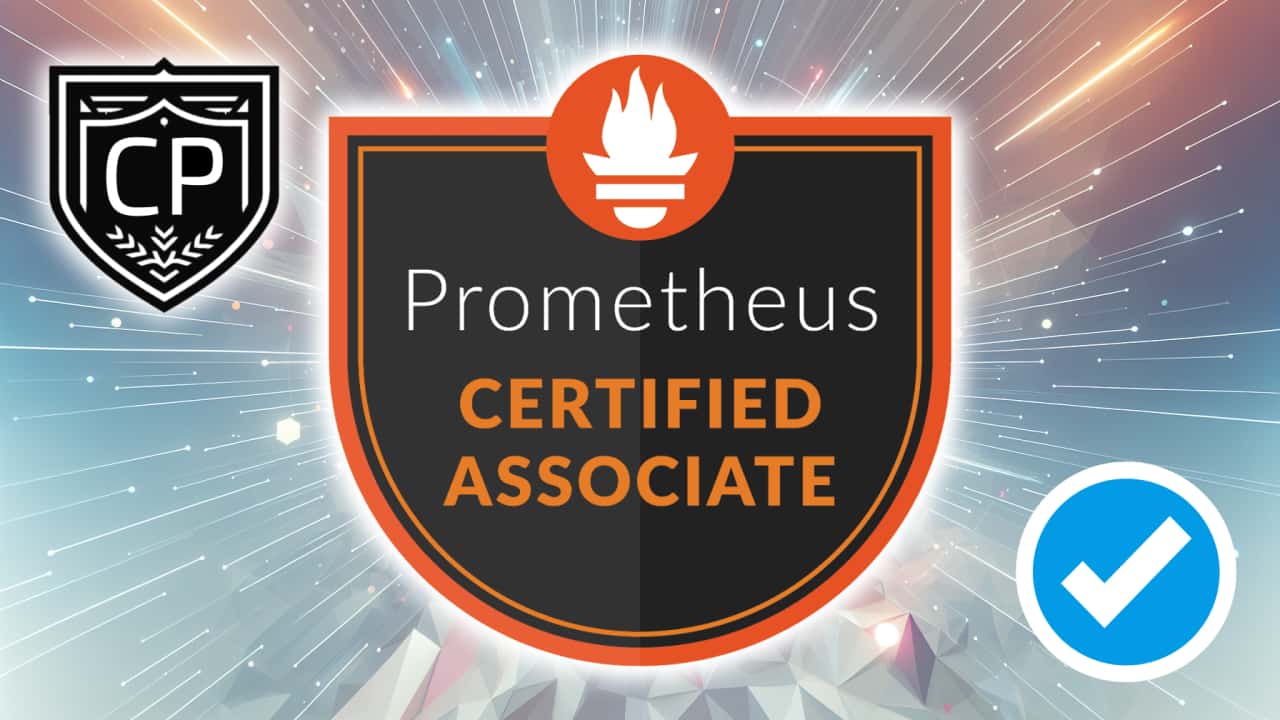
The Prometheus Certified Associate (PCA) certification paves the way for cloud-native professionals to validate their observability expertise with Kubernetes and Prometheus. This exam overview highlights everything you need to know to prepare confidently and build the skills that help teams monitor, measure, and improve reliability across distributed systems.
Why earn the Prometheus Certified Associate certification?
The Prometheus Certified Associate (PCA) from the Cloud Native Computing Foundation (CNCF) validates your knowledge of Prometheus fundamentals and observability best practices within Kubernetes and modern cloud-native environments. It is ideal for developers, SREs, DevOps engineers, and anyone responsible for instrumenting applications, managing metrics, and interpreting system behavior in real-world production systems.
Through this certification, you demonstrate the ability to collect, query, visualize, and act on operational data using Prometheus and its ecosystem components. The PCA credential confirms that you understand how metrics, alerting, and visualizations work together to drive better decision making, helping teams deliver reliable and performant cloud-native workloads.
Who Should Consider the Prometheus Certified Associate (PCA) Certification?
The Prometheus Certified Associate (PCA) certification is designed for professionals who want to demonstrate their foundational knowledge of observability, monitoring, and metrics using Prometheus. It’s an excellent fit for:
- Cloud and DevOps engineers seeking to validate their Prometheus skills
- Application developers who build or maintain systems with observability in mind
- Site Reliability Engineers (SREs) and system administrators working in cloud-native environments
- Students, junior engineers, or IT professionals beginning their journey into cloud-native monitoring
Even if you’re new to Prometheus, this certification is a fantastic way to prove your understanding of modern monitoring concepts and observability best practices.
What Career Opportunities Can This Certification Open?
Achieving the PCA credential can enhance your employability across roles that require strong visibility into system performance. This certification is especially valuable for positions such as:
- Site Reliability Engineer (SRE) or Monitoring Engineer
- Cloud or DevOps Engineer focused on scalable observability
- Software Engineer or Application Developer working with metrics and alerts
- Technical Support Engineer assisting customers with performance issues
Employers recognize the PCA as a trusted credential from the Cloud Native Computing Foundation (CNCF) and The Linux Foundation, both respected leaders in open source technology certifications.
How Much Does the Prometheus Certified Associate Exam Cost?
The Prometheus Certified Associate exam costs $250 USD when purchased individually. However, candidates can choose bundle options that provide added value:
- Exam only — $250
- Exam plus THRIVE-ONE Annual Subscription — $495
- Exam plus Monitoring Systems and Services with Prometheus (LFS241) course — $299
This flexibility allows learners to tailor their preparation approach, whether focusing on self-study or getting structured Linux Foundation training.
What Is the Format of the Exam?
The PCA exam is a remote, online, proctored multiple-choice test. It includes both single-select and multi-select questions that assess your practical and theoretical understanding of Prometheus and observability concepts. You’ll need a webcam, stable internet connection, and a quiet environment to take the exam.
How Long Do You Have to Complete the PCA Exam?
Candidates have 90 minutes to complete the exam. Time management is key, as the exam blends conceptual questions with scenario-based monitoring situations. Being familiar with typical Prometheus workflows ensures you can progress through the sections comfortably within the allotted time.
How Many Questions Appear on the PCA Exam?
The PCA certification exam contains 60 questions in total. Each question contributes to testing your ability to understand, configure, and utilize Prometheus effectively. Questions are designed to simulate real-world monitoring and alerting challenges faced in cloud environments.
What Is the Passing Score for the PCA Certification?
To earn your Prometheus Certified Associate credential, you need a minimum score of 75%. This means you must answer roughly three-fourths of the total questions correctly. The exam ensures that candidates not only grasp the underlying theory of observability but also understand when and how Prometheus can best be used in practical scenarios.
What Topics and Domains Are Covered in the PCA Exam?
The PCA exam tests your competency across five main domains:
- Observability Concepts
- Prometheus Fundamentals
- PromQL
- Instrumentation and Exporters
- Alerting & Dashboarding
What Is the Exam Code for This Certification?
The official exam code for this certification is PCA. This unique code is used to identify the Prometheus Certified Associate exam across the Linux Foundation training platform and during registration or scheduling with proctors.
Are There Any Prerequisites for Taking the Exam?
There are no formal prerequisites to attempt the PCA exam. However, candidates will benefit from having some exposure to cloud-native environments, DevOps tools, and fundamental monitoring principles. Experience using Linux-based systems and basic YAML or configuration files will also make the exam experience smoother.
What Language Is the PCA Exam Offered In?
Currently, the PCA exam is available in English. As the global demand for observability skills grows, future updates may extend support for additional languages.
How Long Is the Prometheus Certified Associate Credential Valid?
Once certified, your Prometheus Certified Associate credential is valid for two years. After this period, you can renew it by retaking the latest version of the PCA exam, ensuring your knowledge remains current with evolving observability practices.
Is This an Entry-Level Certification?
Yes, the PCA is designed as a beginner-level certification. It provides a solid foundation in monitoring systems using Prometheus, ideal for those new to the observability space or looking to validate their knowledge before advancing to more complex certifications within the cloud-native ecosystem.
What Resources Are Allowed During the PCA Exam?
The PCA is a closed-book online proctored exam. You won't have access to notes, additional documentation, or external materials. This ensures the integrity of your results and confirms your retention of core Prometheus concepts.
How Difficult Is the PCA Exam?
The PCA exam is designed to be practical, approachable, and fair. Each question aligns with real-world Prometheus scenarios to test your comprehension and problem-solving skills. Even if you’re newer to observability, the Linux Foundation provides comprehensive resources to ensure you feel confident going into the test.
What Is the Best Way to Prepare for the PCA Exam?
Preparation for the PCA exam is most effective when you combine hands-on experimentation with structured study. Here’s how you can get started:
- Learn PromQL fundamentals by querying sample metrics.
- Deploy Prometheus locally or in a container and practice scraping targets.
- Set up Alertmanager and build dashboards using visualization tools like Grafana.
- Review the official PCA Curriculum Overview and Candidate Handbook.
- Take realistic practice exams for the Prometheus Certified Associate to gauge your readiness and timing before test day.
Consistent practice and familiarity with Prometheus configurations will help you pass with confidence.
Can You Retake the PCA Exam If You Don’t Pass?
Yes, each PCA exam purchase includes one free retake. This gives candidates the opportunity to review their areas for improvement and reattempt the certification within the 12-month eligibility window.
How Do You Schedule and Take the Exam?
After purchasing the exam through the Linux Foundation training portal, you can schedule your PCA assessment at a convenient time. The exam is taken online under remote proctoring through the PSI Bridge platform. Before test day, it’s recommended to use the PSI tutorial to confirm the secure browser setup works properly on your system.
Are There Practice Tests or Labs Available?
Yes! The Linux Foundation and various learning platforms offer hands-on labs, guided courses, and mock exams that help reinforce key concepts. You can combine these with community tutorials and practical Prometheus setups to gain a well-rounded comprehension before taking the official test.
What Are Some Common Mistakes Candidates Should Avoid?
Here are a few habits to avoid while preparing:
- Overlooking PromQL functions and operators, which hold significant weight.
- Ignoring instrumentation and exporters, which are essential for metric collection.
- Not practicing real-world dashboards and alert configurations.
A balanced focus across all exam domains ensures strong performance and a successful outcome.
What Comes Next After Earning the PCA Certification?
After achieving your PCA, you can progress to other CNCF and Linux Foundation certifications, such as:
- Kubernetes and Cloud Native Associate (KCNA)
- Certified Kubernetes Administrator (CKA)
- Certified Kubernetes Application Developer (CKAD)
These certifications build upon the observability principles learned in PCA and open up more advanced cloud-native engineering career paths.
Where Can You Learn More and Register for the Official Exam?
To learn more details, verify exam policies, or enroll directly, you can visit the official Kubernetes and Cloud Native Prometheus Certified Associate (PCA) certification page on the Linux Foundation Training site. It provides all the necessary candidate resources, registration links, and bundle options for your certification journey.