Table of Contents
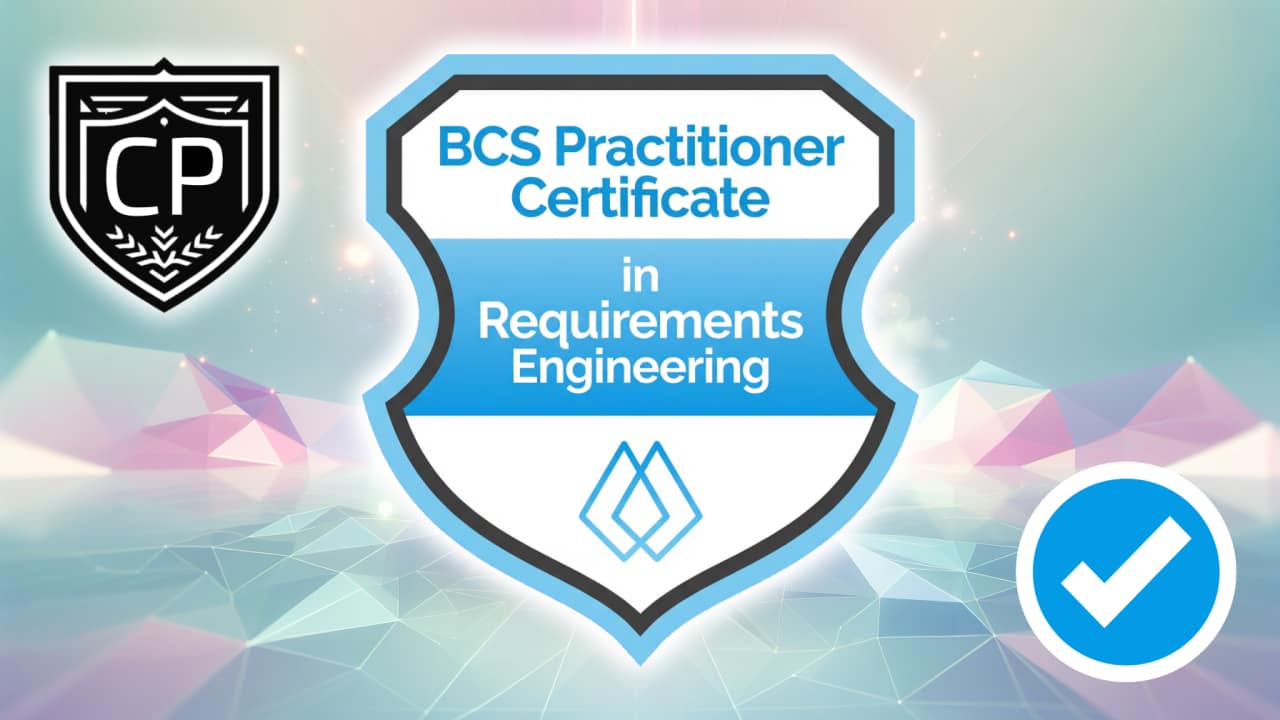
BCS Practitioner Certificate in Requirements Engineering Quick Facts
The BCS Practitioner Certificate in Requirements Engineering empowers professionals to transform complex ideas into actionable, clearly defined requirements. This overview gives you everything you need to feel confident about the structure and focus areas of the certification exam, helping you prepare efficiently and effectively.
What does the BCS Practitioner Certificate in Requirements Engineering demonstrate?
This globally recognized certification validates your ability to apply best practices in requirements definition, documentation, analysis, validation, and management within a structured framework. It demonstrates that you can work collaboratively with stakeholders, elicit accurate requirements, maintain traceability, and support solution development aligned to business goals. Ideal for business analysts, project professionals, and solution designers, this credential equips you with practical techniques and a proven methodology to deliver measurable results in diverse project environments.
Who Should Pursue the BCS Practitioner Certificate in Requirements Engineering?
The BCS Practitioner Certificate in Requirements Engineering is ideal for professionals who want to enhance their skills in eliciting, analysing, and managing business requirements. It’s especially valuable for those aiming to play an influential role in shaping business solutions and ensuring project success.
This certification is perfect for:
- Business Analysts and Systems Analysts
- Project Managers and Product Owners
- Product Managers and Business Change Professionals
- Those responsible for defining and managing business needs in projects
If you are eager to adopt a structured approach to uncovering and documenting requirements, this qualification offers a strong professional edge.
What Career Opportunities Can This Certification Unlock?
Achieving the BCS Practitioner Certificate in Requirements Engineering opens pathways to a variety of roles across industries. It is recognized globally as part of the BCS International Diploma in Business Analysis, which adds credibility to your competencies.
Common job roles that value this certification include:
- Business Analyst or Senior Business Analyst
- Requirements Engineer
- Systems Analyst
- Business Process Analyst
- Product Manager or Product Owner
- Business Change Consultant
These roles often require professionals who can bridge the gap between business needs and technical solutions. The BCS Practitioner Certificate demonstrates your ability to do exactly that.
What Version of the Exam Is Current?
The latest version available is BCS Practitioner Certificate in Requirements Engineering v6.0. This updated syllabus aligns with the newest best practices in the field and focuses on applying a systematic approach across requirements activities, from elicitation to management.
Being aligned with the Business Analysis Service Framework (BASF), it ensures you learn practical methods used across modern business and IT environments.
How Much Does the Exam Cost?
The exam costs £230 in the UK, which includes a remote proctoring fee for candidates taking the exam online. VAT is applied at the time of purchase. Prices outside the UK vary by region, so international candidates should verify with BCS before registering.
Training costs will differ depending on the study mode and provider. You can take the exam through an approved BCS Training Provider or study independently.
How Many Questions Are on the BCS Practitioner Certificate in Requirements Engineering Exam?
The exam includes 40 multiple-choice and multiple-response questions. Each question is carefully designed to assess your knowledge of techniques, processes, and problem-solving methods in real-world business analysis scenarios.
You can expect scenario-based questions that test your analytical and interpretive abilities, mirroring the kind of tasks performed by business analysts in professional environments.
How Long Is the Exam?
You’ll have 60 minutes to complete the exam. This duration allows ample time to carefully read each question and apply your reasoning.
Self-paced preparation is key. It’s recommended that students dedicate a minimum of 18 hours of study time in total before taking the assessment.
What Score Do You Need to Pass?
To achieve the certification, you must score 65% or higher—that means correctly answering at least 26 out of 40 questions. The exam uses a straightforward scoring method, so every question carries equal weight towards your final score.
Your results validate your competence across all stages of the requirements engineering process, demonstrating your ability to apply theory to practice.
Is the Exam Computer-Based or Paper-Based?
The BCS Practitioner Certificate in Requirements Engineering exam is delivered in digital format. Candidates take the exam online through remote invigilation or at an approved test centre.
You’ll receive instant confirmation upon submission, and results are processed quickly. This modern approach ensures that candidates around the world have secure and convenient access to certification opportunities.
Is the Exam Open Book?
No. The exam is closed book, which means you cannot bring in study materials, notes, or reference books.
This helps ensure that the certification reflects your true understanding and applied knowledge of concepts and techniques—not memorization.
What Languages Is the Exam Offered In?
The primary language of the exam is English. All questions, interface elements, and communications are provided in English unless otherwise stated.
Candidates whose first language is not English may request additional time or accommodations in line with the BCS reasonable adjustments policy.
What Does the Exam Test You On?
The exam measures your ability to effectively elicit, document, analyse, validate, and manage business requirements. It tests both methodological knowledge and the practical decision-making involved in each stage of the Requirements Engineering Framework (REF).
Through scenario-oriented questions, candidates demonstrate how to:
- Engage with stakeholders to uncover requirements
- Apply multiple elicitation methods (such as interviews, workshops, and document analysis)
- Produce high-quality requirement documentation
- Validate requirements against business objectives
- Manage requirement changes throughout a project lifecycle
What Are the Major Knowledge Domains in the Exam?
The BCS Practitioner Certificate in Requirements Engineering syllabus is divided into six weighted domains:
- Requirements Definition as a Service
- Eliciting Requirements
- Documenting Requirements
- Analysing Requirements
- Validating Requirements
- Managing Requirements
Together, these domains ensure a deep understanding of the full spectrum of requirements activities, helping candidates connect conceptual frameworks to real business contexts.
Are There Any Prerequisites for This Exam?
There are no formal prerequisites. However, it’s beneficial if you have prior exposure to basic business analysis concepts. Many candidates choose to earn the BCS Foundation Certificate in Business Analysis first, as it offers helpful background knowledge.
Whether you’re new to requirements engineering or an experienced professional, this course provides a structured learning path that builds foundational and applied capability.
How Long Should I Prepare Before Taking the Exam?
Preparation time varies depending on your experience. Most learners dedicate around 18 to 25 hours of focused study before sitting the exam.
Structured training courses—either classroom-based or online—typically extend over three days, offering intensive hands-on learning and group discussions. Self-study candidates benefit by following the syllabus and studying official BCS publications.
What Study Materials Should I Use?
BCS recommends several core resources to help guide your preparation:
- Business Analysis (4th Edition) by Debra Paul and James Cadle
- Agile and Business Analysis (2nd Edition) by Lynda Girvan and Debra Paul
- Business Analysis Techniques: 123 Essential Tools for Success by James Cadle and colleagues
These resources cover the full range of syllabus topics and offer detailed insights, examples, and frameworks useful in real-world practice.
How Can I Best Prepare for the Exam?
Pair theoretical learning with practical insight. Review each stage of the Requirements Engineering Framework and practice applying elicitation, documentation, and analysis techniques to case studies.
A great way to strengthen your confidence is by working through realistic, exam-style questions. You can find highly rated practice material that mirrors the real test format here: practice exams for the BCS Practitioner Certificate in Requirements Engineering.
How Is the Exam Scored and Delivered?
The BCS exam system captures your answers digitally and calculates your score immediately. Results are then validated through the BCS certification system before issuing your official certificate.
Your certificate will clearly state your successful completion of the Practitioner Certificate in Requirements Engineering, which is valid indefinitely.
How Long Is the Certification Valid?
The Practitioner Certificate in Requirements Engineering does not expire. Once earned, you’ll hold it for life, showcasing your capabilities across industry-recognised standards.
However, continuous learning and earning additional BCS business analysis certifications is encouraged. They help you advance toward the International Diploma in Business Analysis, which requires four modules including this one.
Can I Take the Exam Online from Anywhere?
Yes. The exam can be taken remotely with live online proctoring or at a physical test centre worldwide via Pearson VUE or directly through BCS.
Remote candidates will need a webcam, a reliable internet connection, and a quiet testing environment. It’s an excellent option for professionals balancing work commitments with study goals.
How Difficult Is the BCS Practitioner Certificate in Requirements Engineering Exam?
This exam helps learners think critically about business problems rather than simply recall definitions. The questions encourage you to apply analytical reasoning, select appropriate techniques, and evaluate outcomes logically.
Candidates who study methodically and practise applied reasoning typically find the exam engaging and rewarding. It’s designed to assess real competence, not rote memorization.
How Does This Certification Fit into the Bigger Picture of Business Analysis Qualifications?
The Practitioner Certificate in Requirements Engineering is one of four core modules required to earn the BCS International Diploma in Business Analysis. Completing it demonstrates strong specialization in gathering and defining business requirements.
Progressing through additional modules, such as Business Analysis Practice or Modelling Business Processes, can elevate your professional profile and lead to globally recognised expertise.
What Comes After This Certification?
Once you’ve attained this certification, advancing to the BCS International Diploma in Business Analysis is a natural next step. This requires completing four modules—two core, one knowledge, and one practitioner—followed by a final oral assessment.
Further specializations, project leadership roles, and consulting opportunities often follow for certified practitioners.
Where Can I Learn More or Register Officially?
You can find the most up-to-date registration details, syllabus downloads, and official resources on the official BCS Practitioner Certificate in Requirements Engineering certification page. There, you’ll also find information about exam booking through approved partners or directly with BCS.
Earning the BCS Practitioner Certificate in Requirements Engineering is a powerful step toward professional recognition, strategic thinking, and effective collaboration in business analysis. With focused preparation and the right practice materials, you can confidently unlock the next level of your business analysis career.