Table of Contents
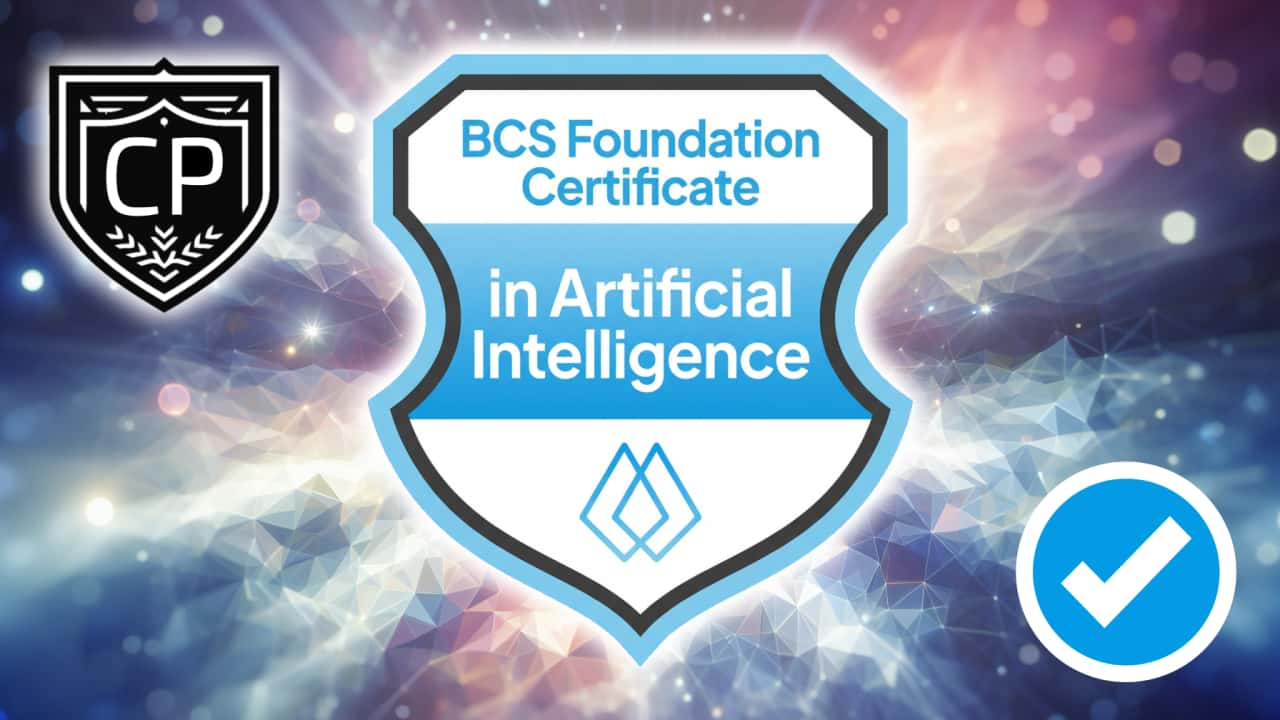
BCS Foundation Certificate in Artificial Intelligence Quick Facts
The BCS Foundation Certificate in Artificial Intelligence equips learners with the understanding and confidence to explore AI concepts that are shaping the modern world. This overview gives you clear insight into what to expect so you can focus your preparation and move forward with purpose and enthusiasm.
Why earn the BCS Foundation Certificate in Artificial Intelligence?
This globally recognized qualification demonstrates your foundational understanding of artificial intelligence, including its terminology, techniques, applications, and ethical considerations. Designed for a wide range of professionals—from business leaders to technical teams—it bridges the gap between theory, practice, and strategic impact. You will explore how AI supports innovation, sustainability, and practical problem-solving across industries, developing a grounded understanding of how intelligent systems are designed, deployed, and governed responsibly.
Who should consider earning the BCS Foundation Certificate in Artificial Intelligence?
The BCS Foundation Certificate in Artificial Intelligence is ideal for professionals who want to understand how AI works and how it can be applied to solve business challenges. It’s particularly beneficial for engineers, developers, project managers, business strategists, consultants, and organizational change practitioners who want to integrate AI solutions into their strategic or operational workflows. Even those without a technical background but with a strong interest in how AI impacts business and society will find this certification a valuable introduction to the field.
What job roles does this certification open up?
This certification broadens your opportunities in a wide range of sectors. While it’s a foundation-level qualification, it demonstrates practical AI literacy that can strengthen your credentials for roles such as:
- AI Project Coordinator
- Business Analyst or Consultant (AI-focused)
- Data and AI Solutions Assistant
- Process Automation Specialist
- Emerging Technology Strategist
More advanced AI roles, such as Machine Learning Engineer, AI Research Specialist, or AI Ethics Specialist, can follow once you build upon this foundational learning with additional technical study.
What is the latest version of the BCS AI exam?
The most current exam available is the BCS Foundation Certificate in Artificial Intelligence v2.0, which covers the latest advances in AI including generative AI and large language models (LLMs). This version aligns with modern ethical frameworks, sustainability considerations, and the emerging regulatory environment around AI usage.
How much does the BCS Foundation Certificate in AI exam cost?
The self-study exam-only option costs £200, which includes the remote proctoring fee. Prices vary by region and local VAT or taxes may apply. For candidates taking training through accredited providers, costs may differ depending on delivery format and country.
How long is the exam and what format does it follow?
Candidates have 60 minutes to complete a 40-question multiple-choice exam. The test is closed book, meaning no reference materials are allowed during the assessment. It is offered online under supervision, ensuring both flexibility and exam integrity. Achieving success requires understanding the core principles of AI rather than memorizing textbook answers.
What score do I need to pass the BCS AI exam?
You need a minimum of 65% (26 out of 40 questions) to pass. The scoring is straightforward, with each question valued equally. Your results demonstrate comprehension of AI fundamentals, ethical frameworks, and real-world applications rather than just theoretical memorization.
How many hours should I study for this certification?
On average, candidates spend about 60 hours of total preparation time. This includes reviewing foundational AI concepts, exploring case studies, and performing self-assessments or mock exams. If you choose to attend classroom or virtual training through a BCS-accredited training provider, sessions typically run for three days, but additional self-study is always encouraged to build confidence.
What languages is the exam offered in?
Currently, the BCS Foundation Certificate in Artificial Intelligence exam is offered in English. However, some accredited training partners may offer instruction or support materials in other languages, depending on regional demand.
What topics and domains does the exam cover?
The BCS AI exam content is divided into six equally important knowledge domains, each representing a key area of AI. The domain weightings are as follows:
- Introduction to AI and Historical Development
- Ethical and Legal Considerations
- Enablers of Artificial Intelligence
- Finding and Using Data in AI
- Using AI in Your Organisation
- Future Planning and Impact: Human Plus Machine
Study each domain carefully, as they build on one another—from fundamental definitions and ethical principles to applied AI project planning and long-term implications for society.
What does the BCS Foundation Certificate in AI syllabus include?
The syllabus offers an excellent overview of concepts such as human and artificial intelligence definitions, machine learning, robotics, sustainable AI, and the responsible use of large datasets. It also introduces practical frameworks like the scientific method, risk management, and AI governance principles. This combination of theory and real-world discussion prepares you to assess and manage AI adoption within your organization.
Are there any prerequisites or entry requirements?
There are no formal prerequisites for taking this certification. That means anyone with curiosity and commitment can start their AI journey here. However, familiarity with digital technologies, data analysis, or business systems will make the material more relatable. BCS recommends completing the BCS Essentials Certificate in AI first if you are brand new to the subject.
What skills and knowledge will I gain after certification?
By the end of your preparation, you’ll have a well-rounded understanding of:
- How AI systems learn from data
- The differences between machine learning, robotics, and generative AI
- Ethical frameworks guiding AI development
- Risk management and governance models for AI projects
- How to identify and implement AI opportunities in an organization
- The societal and economic implications of AI in the workplace
These skills establish you as a forward-thinking professional aware of both the opportunities and responsibilities that AI brings.
How should I prepare for the BCS AI exam?
A balanced approach combining guided study and practical reinforcement works best. Begin by reviewing the official syllabus and studying from recommended reading materials provided by BCS. Strengthen your understanding with realistic BCS Foundation Certificate in Artificial Intelligence practice exams that replicate actual exam conditions. Practice tests will help you refine your timing and find areas that need review.
How long is the certification valid?
The BCS Foundation Certificate in Artificial Intelligence does not expire. However, as AI evolves rapidly, BCS continually updates its syllabi to reflect industry trends. Many professionals choose to advance toward more specialized AI or data-focused BCS certifications to ensure their knowledge stays current.
What roles are best suited for someone with this certification?
This credential is particularly relevant for professionals involved in technology strategy, process improvement, or innovation management. Roles in finance, healthcare, education, and IT services also benefit greatly due to AI’s increasing role in automation, data insights, and predictive modeling.
Is classroom training required?
While classroom or virtual training with an accredited provider is recommended, it’s not mandatory. Self-study candidates can register directly with BCS or Pearson VUE. Choose the learning path that best fits your schedule and learning style.
How can I register for the exam?
You can register in several ways:
- Directly through BCS – by calling their support or through their online platform.
- Via Pearson VUE – available globally through their online testing portal.
- Through an accredited training provider – which can combine both learning and exam booking in one bundled offering.
What study resources are recommended?
BCS recommends two primary study titles:
- Artificial Intelligence Foundations: Learning from Experience by Andrew Lowe and Steve Lawless
- Getting Started with ChatGPT and AI Chatbots by Mark Pesce
You can also enrich your study experience with online communities, webinars, and supplementary AI reading to see how theory meets practice.
What are common mistakes to avoid during preparation?
Candidates sometimes focus too much on memorizing definitions instead of understanding real-world context. To do well, explore how AI principles apply across industries, such as in healthcare diagnostics, digital marketing, or automation. Also, practice reviewing ethical frameworks and governance models, as these are central to developing responsible AI literacy.
How will this certification impact my career trajectory?
The knowledge gained will make you an informed contributor in strategic discussions about AI adoption, risk, and governance. Whether you work in a technical or business field, this certification signals that you understand AI’s potential and its responsible application. It’s an excellent foundation for continuing into more advanced studies in data science, machine learning, or ethical technology leadership.
Where can I find official information about the BCS Foundation Certificate in Artificial Intelligence?
For complete details on registration, syllabus downloads, and accredited training providers, visit the official BCS Foundation Certificate in Artificial Intelligence certification page hosted by BCS, The Chartered Institute for IT.
The BCS Foundation Certificate in Artificial Intelligence is a gateway to understanding one of the most transformative forces shaping the modern world. Whether you’re looking to enhance your career, guide digital transformation, or simply build confidence in discussing AI responsibly, this certification helps you stand at the forefront of change—equipped, informed, and ready for the future.